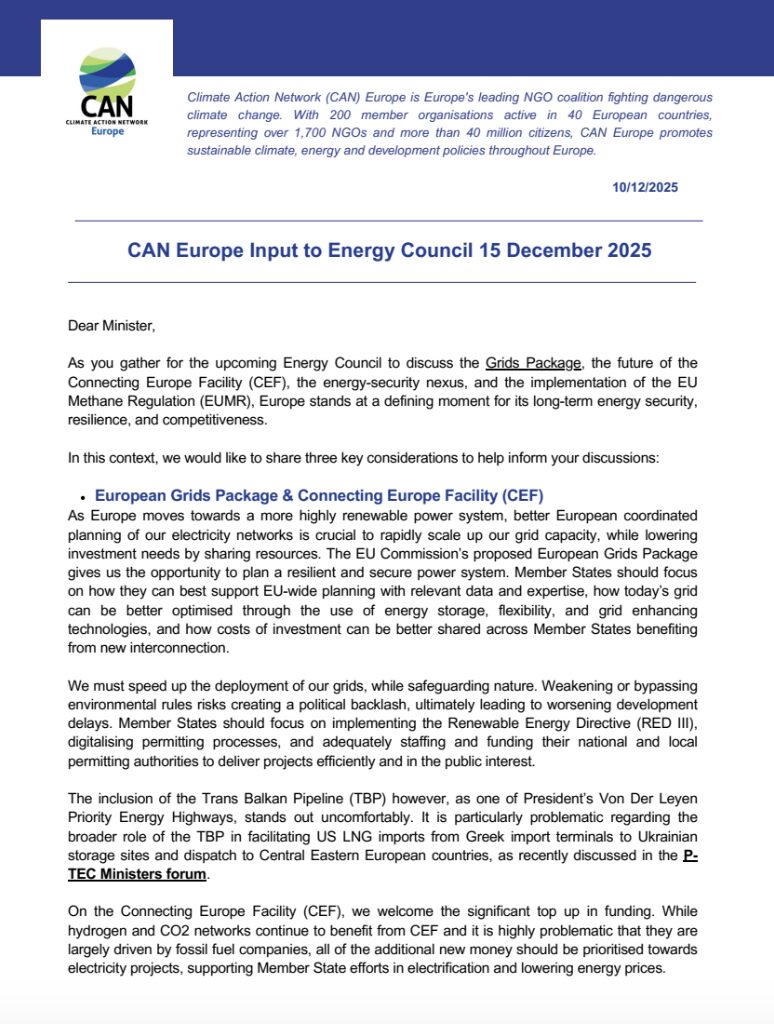
Brussels 15 December – As the Energy Council takes place in Brussels, CAN Europe and Food & Water Action Europe are on the ground with a clear message: EU energy policy must be made in Europe, not shaped by foreign fossil fuel interests.
While EU Energy Ministers debate issues ranging from EU energy grids to energy security and methane rules, US fossil gas interests are pushing for greater influence over Europe’s energy market. Trump administration’s energy-dominance strategy combines trade tariffs threats with pressures to weaken EU climate and energy policies such as methane rules or last week’s adopted Grids Package, all to sell more Liquefied “Natural” Gas (LNG).
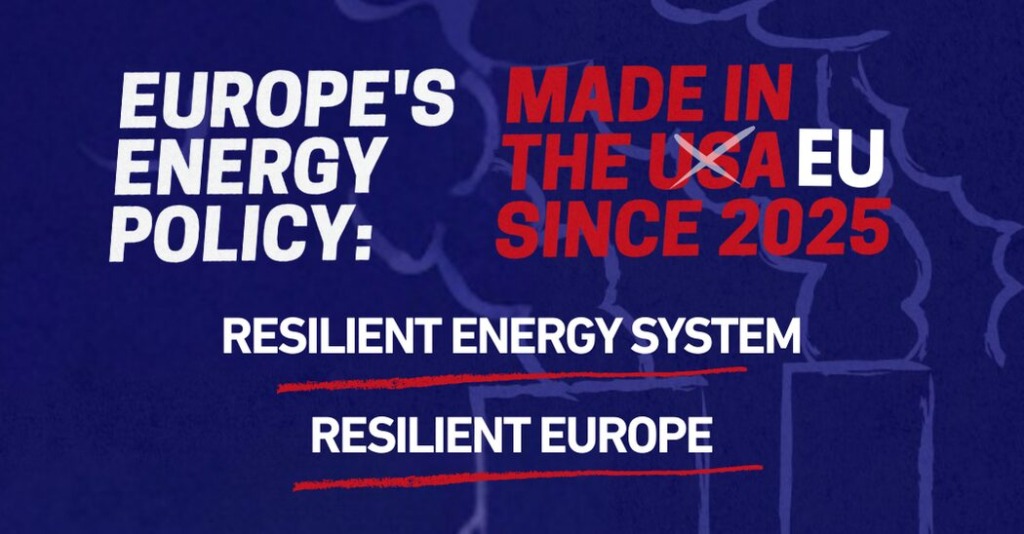
The stakes are high. Continuous attempts to dilute the EU Methane Regulation, combined with growing political attacks and disinformation/misinformation on renewable energyundermine Europe’s sovereignty and make the EU more dependent on a single source of fossil fuel imports, by swapping one fossil fuel dependency for another rather than reducing dependence overall. Initiatives for example like the Trans-Balkan Pipeline (TBP), which could turn Greece into a key US LNG gateway, show how foreign interests are shaping EU energy decisions, risking stranded assets and long-term dependency. Europe cannot let its energy future be decided elsewhere.
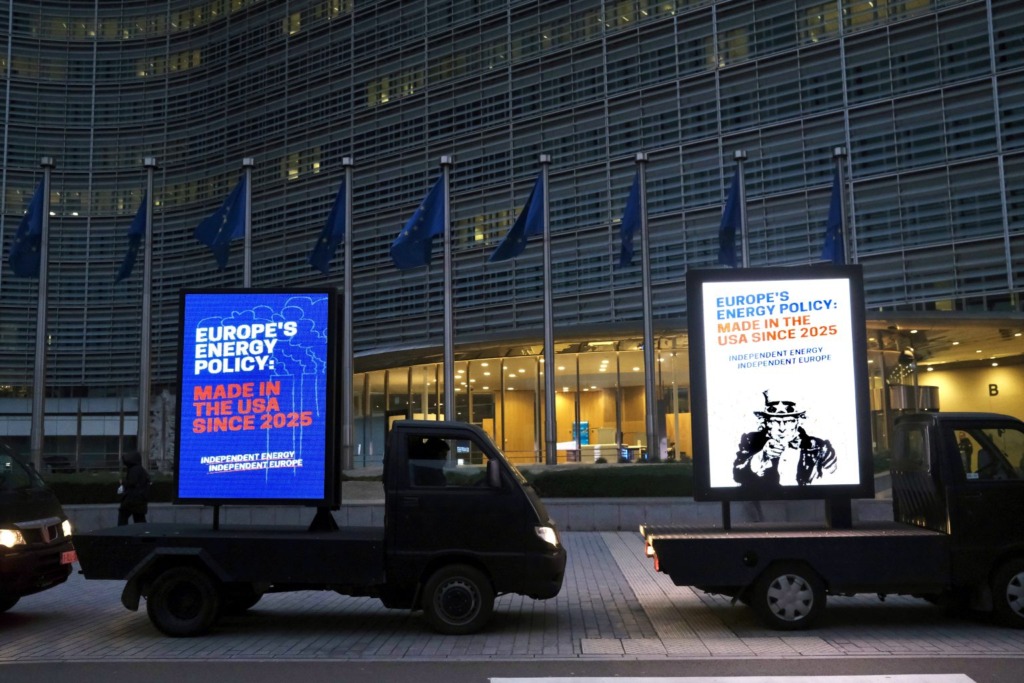
In today’s action, we took our message onto the streets of Brussels and showed up in front of the EU institutions to urge ministers to shape Europe’s own energy policy. We highlighted how the EU Methane Regulation is the first law to put binding obligations not only on domestic fossil-fuel producers and operators but also on importers of coal, oil and fossil gas, including LNG. If properly enforced, the EUMR could slash methane emissions worldwide, complementing the EU’s declining gas demand, and marking a first step towards phasing out fossil gas while shifting to efficient, renewable, and electrified energy systems. Weakening the rules or accepting “pragmatic” approaches for “equivalence” risks giving polluters abroad the possibility to continue emitting, undermining Europe’s climate credibility.
Meanwhile, Energy Ministers at the Council discussed three key files that will shape Europe’s future. In our letter sent ahead of the meeting, CAN Europe outlined three key priorities:
- On the European Grids Package and Connecting Europe Facility (CEF): Europe must rapidly scale up and optimise its electricity grids through coordinated EU wide planning, improved permitting, and CEF funding focused on electricity infrastructure rather than new fossil networks, while safeguarding nature and ensuring redistribution of benefits for local communities.
- On Energy security: The landmark political agreement on the REPowerEU Regulation should be the final step toward ending Europe’s dependence on Russian fossil fuels, not replacing Russian fossil gas with US LNG under new dependencies. It must rely on structural gas demand reduction, energy savings, renewables-based electrification and interconnected grids.
- Methane Regulation: Ministers must ensure full implementation of the Regulation -rejecting weakened import rules, “equivalence” shortcuts or symbolic MRV provisions, particularly for US LNG.
The decisions made today will shape Europe’s long-term resilience, affordability and autonomy. Europe now faces a clear choice: either bow to US pressure, weaken methane rules alongside other EU energy and climate policies, and place its energy security in external hands, or defend the EU Methane Regulation and stand strong for Europe’s energy security. Upholding strong rules and scaling up energy savings, renewables, and modern grids is the only way to secure a resilient, affordable, and truly European energy future.
“The EU’s key to energy resilience lies in Europe. Every euro spent on imported fossil gas distracts from where investment is truly needed: a robust, interconnected European grid that enables the cross-border flow of clean renewable electricity and integrates homegrown renewables. That’s how we secure real security, lower prices, and a fair energy system for European households.” Thomas Lewis – Energy Policy Coordinator, CAN Europe
“Every shipment of US LNG comes with hidden climate and health costs from methane emissions. Without strong methane rules, import loopholes risk locking Europe into fossil gas for decades to come. Allowing more US LNG to be imported through the Trans-Balkan Pipeline (TBP) would only serve US fossil fuel interests, flooding the EU market with unnecessary fossil gas and threatening Europe’s energy independence.” Esther Bollendorff – Senior EU Gas Policy Coordinator, CAN Europe
“The EU’s shift from Russian gas to US LNG and fossil gas imports from elsewhere fails to deliver true energy security: It’s merely trading one dependency for another. Most of US LNG is ‘fracked’ gas, driving methane emissions and devastating local communities. New long-term contracts lock in fossil fuels, delaying urgent climate action and exposing people to volatile prices. The EU must choose a different path: phasing out fossil gas and investing in clean, fair, homegrown energy. “ Enrico Donda – Gas Campaigner, Food & Water Action Europe
Read and download the letter here.