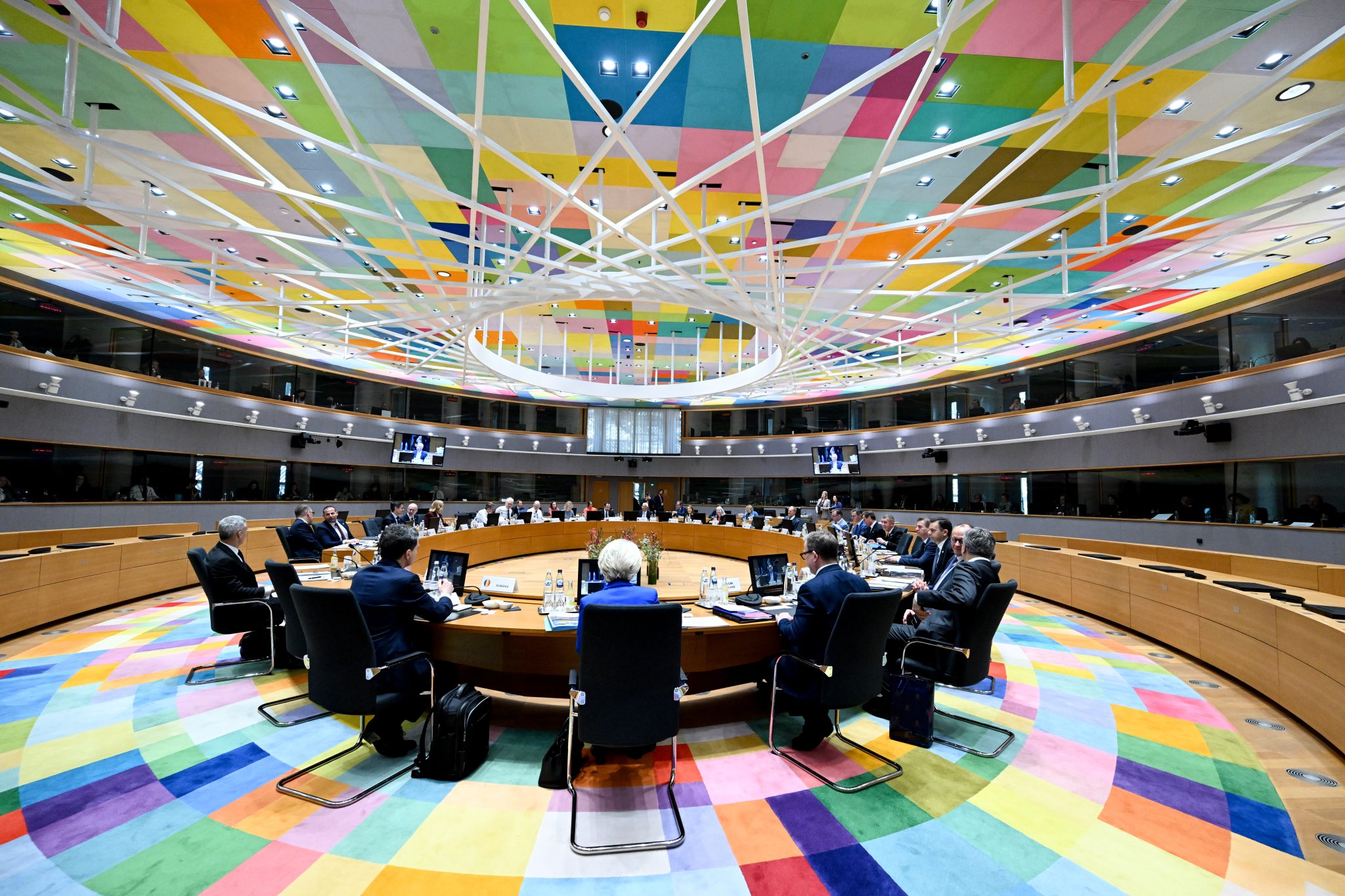
Brussels, 19 March 2026 – As EU leaders continue their talks at the European Council meeting, Climate Action Network (CAN) Europe urges the EU to step up diplomatic efforts, uphold international law and work with partners to stop the war in Iran and the Middle East. At the same time, the EU must prepare a robust response at home that protects households from price shocks while accelerating the energy transition over the long term. The war, once again, exposed the cost of the EU’s fossil fuel dependence.
Chiara Martinelli, Director at CAN Europe, said:
“The EU and its members must engage in constructive and united diplomacy to stop the war. Fossil fuels make Europe and the rest of the world weaker, not safer. As long as the EU relies on imported fossil fuels, households and businesses will remain exposed to global price shocks. Real energy security lies in accelerating the energy transition and putting an end to fossil fuel dependence. Backsliding on core elements of the EU’s climate framework would only weaken Europe’s response to the crisis.”
In Europe, the situation is not a repeat of the 2022 fossil fuel price crisis, following the Russian invasion of Ukraine, on the scale and dynamics, but it is driven by the same problem: Europe’s dependence on fossil fuels. The key lesson remains unchanged: short-term relief must go hand in hand with structural solutions, and weakening climate policy will not bring prices down. Right now, vulnerable households and businesses need targeted support, including cutting electricity taxes. The EU should also reintroduce a tax on the excess profits of the fossil fuel industry banking on the crisis, creating public revenue to cushion household energy bills. After the immediate, targeted relief, long-term stability will only come from reducing Europe’s fossil fuel demand and scaling up homegrown renewable energy, modern grids, storage and energy savings measures.
Seda Orhan, Head of Energy at CAN Europe, said:
“EU leaders are right to focus on immediate relief, but they must not forget the lessons learned from the past fossil fuel crises. Support must be targeted, temporary, and protect the most vulnerable, without increasing fossil fuel demand or distorting the energy transition. Cutting electricity taxes and using revenues from taxing fossil fuel windfall profits can provide that relief fairly, while doubling down on investments for the transition and empowering consumers will bring long-term benefits and shield people against price volatility for good. This is a moment to lock in stronger provisions for the energy transition in the EU’s next long-term budget, securing truly affordable energy for citizens and businesses across Europe.”
Against this backdrop, CAN Europe also warns against any attempt to undermine the EU’s Emissions Trading System (ETS), Europe’s most effective climate tool.
“The ETS is not the problem, it’s part of the solution. Lowering climate ambition for industry doesn’t remove emissions – it just shifts the burden to other sectors like agriculture and households, while undermining investments by Europe’s clean industry leaders. This is a fossil fuel price crisis, and the only way to stabilise prices in the long run is to reduce our dependence on fossil fuels by accelerating renewables, energy savings and electrification. Crucially, this acceleration is partly financed and incentivised by the ETS itself.”
As geopolitical tensions rise and global competition intensifies, EU leaders face a defining choice: protect Europe by accelerating a renewable, efficient, and resilient energy system or remain exposed to the volatility of fossil fuel markets. Europe’s security, competitiveness and affordability depend on moving faster – not slower – away from fossil fuels.
– ENDS –
Notes to Editor:
- CAN Europe’s Statement to EU leaders on the Conflict in the Middle East
- CAN Europe letter to EU leaders ahead of the European Council
For more information and media requests:
- Jani Savolainen, jani.savolainen@caneurope.org, +358504667831
- James O’Connor, james.oconnor@caneurope.org