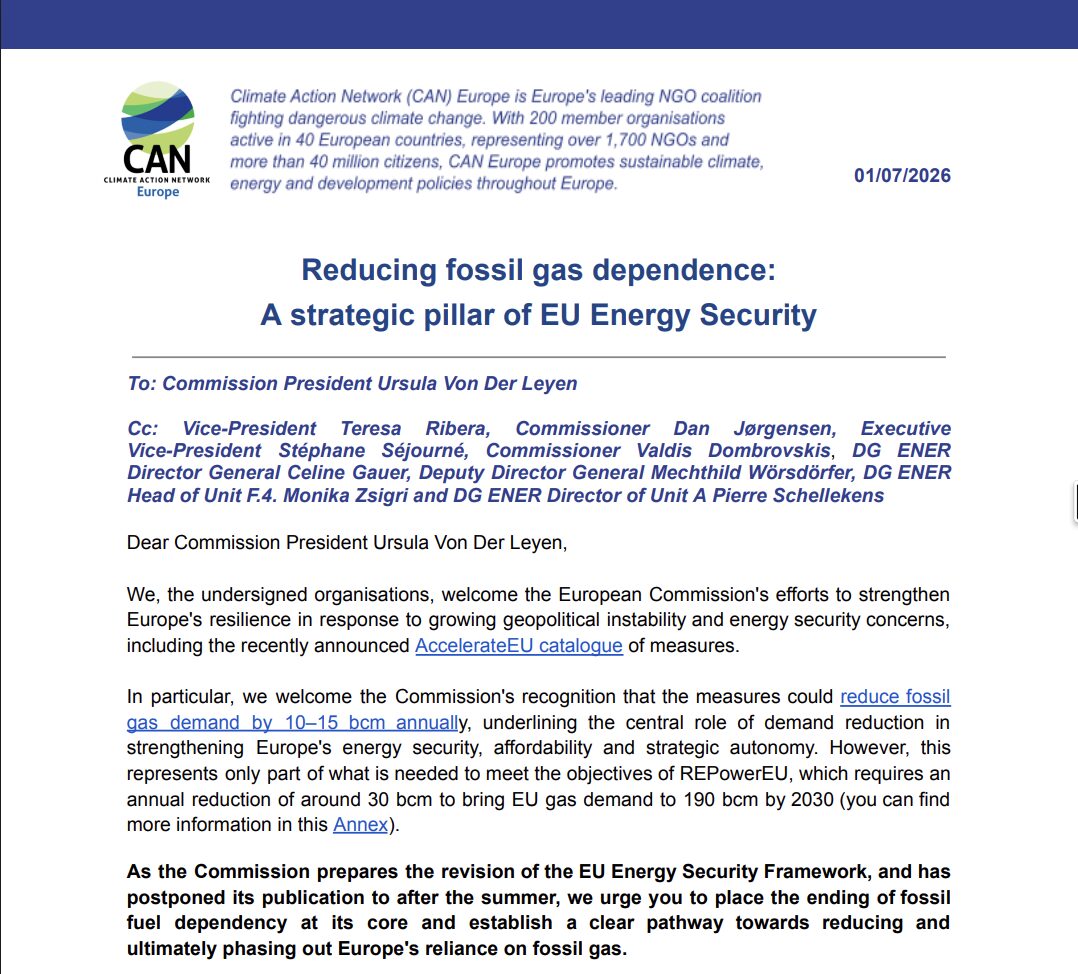
As Europe swelters through another summer of record-breaking temperatures, a troubling paradox is becoming impossible to ignore: fossil fuels are driving increasingly deadly heatwaves, and the EU’s dependence on them is undermining affordability and energy security, as geopolitical conflicts in the Middle East have recently made clear. The only lasting way to protect European citizens from both climate impacts and spiking energy prices is to end the EU’s dependence on fossil fuels.
Two crises, one cause
This June, temperatures across large parts of Europe climbed far above seasonal averages, with many regions experiencing extreme heat unprecedented only a few decades ago. Scientists have concluded that such events would have been virtually impossible without human-induced climate change caused by fossil fuel emissions. Heatwaves that were once rare are now becoming far more frequent and intense, keeping temperatures 5–12°C above seasonal averages.
At the same time, Europe is experiencing another fossil fuel shock within just four years since Russia’s full-scale invasion of Ukraine. The US-Israel led war on Iran has disrupted global fuel supplies, spiking energy prices everywhere, particularly in Europe. Europe’s continued vulnerability to volatile prices and supply disruptions is placing a growing financial burden on households and small businesses, pushing people into energy poverty and damaging Europe’s economy
These are not two separate crises. Deadlier heatwaves and energy insecurity are two consequences of the same structural problem: dependence on fossil fuels.
The good news is that Europe has already demonstrated that it can reduce fossil gas. The challenge now is to ensure that this progress becomes the foundation of a permanent transition rather than a temporary response to the crisis. That means moving beyond emergency measures and adopting a genuine Fossil Gas Exit strategy.
Reducing fossil fuel dependence strengthens both affordability and energy security
The Russian invasion of Ukraine triggered an unprecedented energy crisis and forced Europe to rethink its dependence on imported fossil fuels. The EU has already shown that it can break its fossil gas addiction. Since the energy crisis of 2022, EU gas demand has fallen by almost a fifth surpassing the voluntary 15% demand reduction target established under REPowerEU – the EU’s plan to phase out Russian fossil fuels imports.
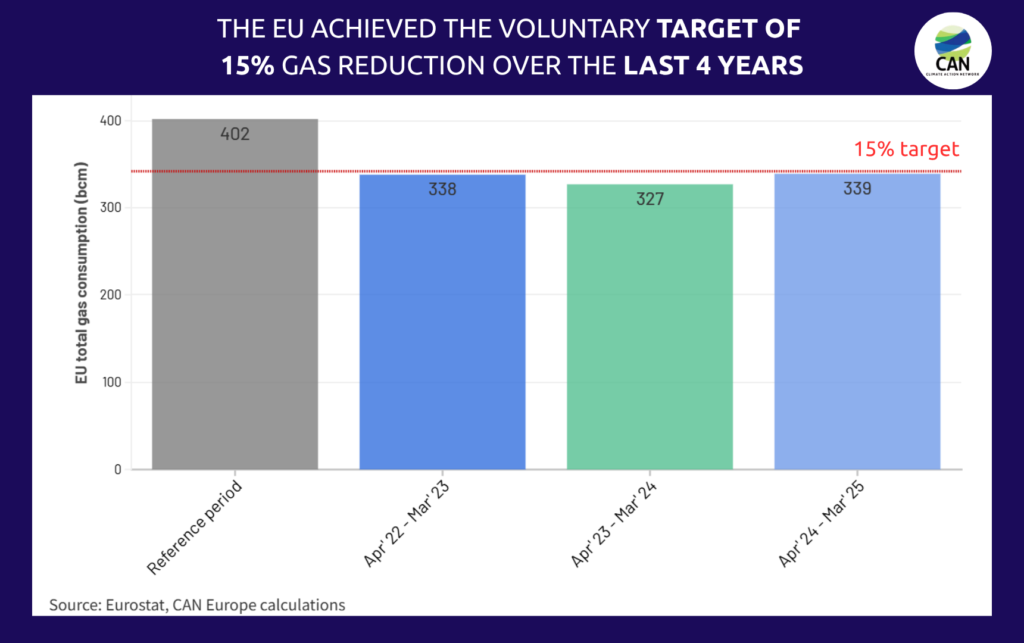
Several factors contributed to this decline, including energy savings measures, improved efficiency and changes in industrial consumption. Most importantly, the rapid expansion of renewable energy and solar has played a decisive role.
As renewables have increased their share in Europe’s power system, electricity markets have become less exposed to expensive fossil fuels. In 2025, average EU wholesale electricity prices stood at around €90/MWh – approximately two and a half times lower than the extraordinary peaks recorded during the 2022 energy crisis. According to the European Environment Agency, while global gas price spikes cost the EU an additional €13 billion by mid-April this year, renewable energy saved Europeans around €29 billion. REPowerEU modelling also shows that accelerating the transition could reduce gas prices by €8.2/MMBtu (21%) and electricity prices by €62/MWh (30%).
The evidence is clear: reducing fossil gas demand lowers energy bills, improves resilience and strengthens Europe’s energy security.
Yet despite this evidence, Europe’s dependency on imported fossil gas has not ended.
Swapping Russian gas for US LNG is not a strategy
The EU still imports almost 90% of the gas it consumes. While Russian gas imports have fallen dramatically – from 44% of total gas imports in 2021 to around 12% in 2025 – the underlying dependency has not disappeared. It has merely shifted.
The reduction in Russian supplies has been accompanied by growing reliance on Liquified “Natural” Gas (LNG), particularly from the United States which in 2025 accounted for 58% of total EU LNG imports.
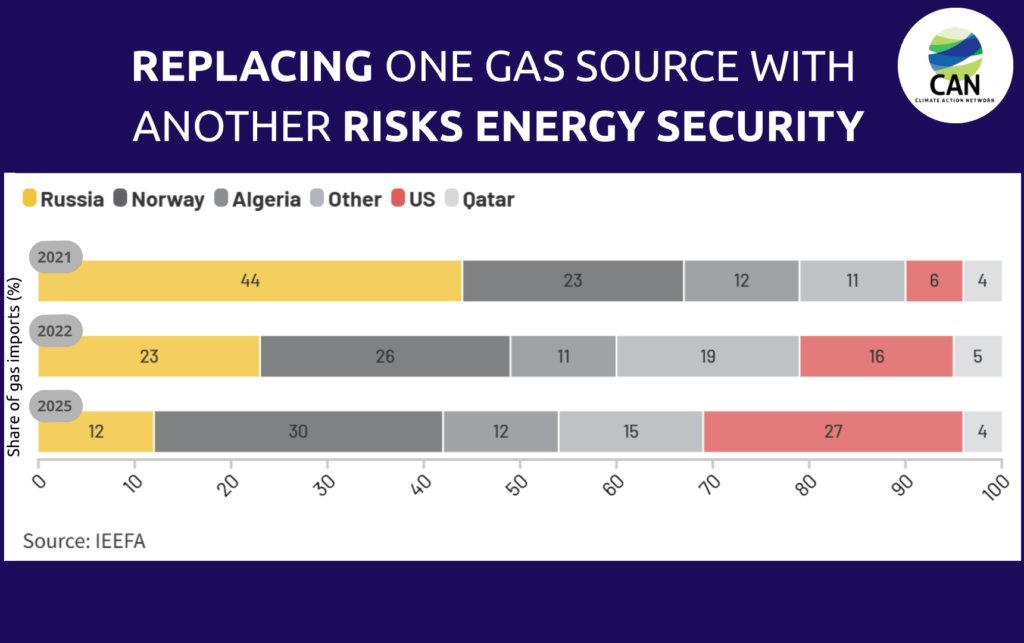
This is neither a secure nor sustainable solution.
US LNG is expensive and highly polluting. Much of it is produced through hydraulic fracturing, one of the most methane-intensive methods of fossil fuel extraction which is not only highly environmentally damaging, but has also disastrous impacts on the health of local US communities. At the same time, the EU Agency for the Cooperation of Energy Regulators (ACER) in its latest report warns that increasing reliance on LNG will expose Europe to greater global price volatility. More LNG imports mean greater exposure to international gas markets and higher risks for consumers.
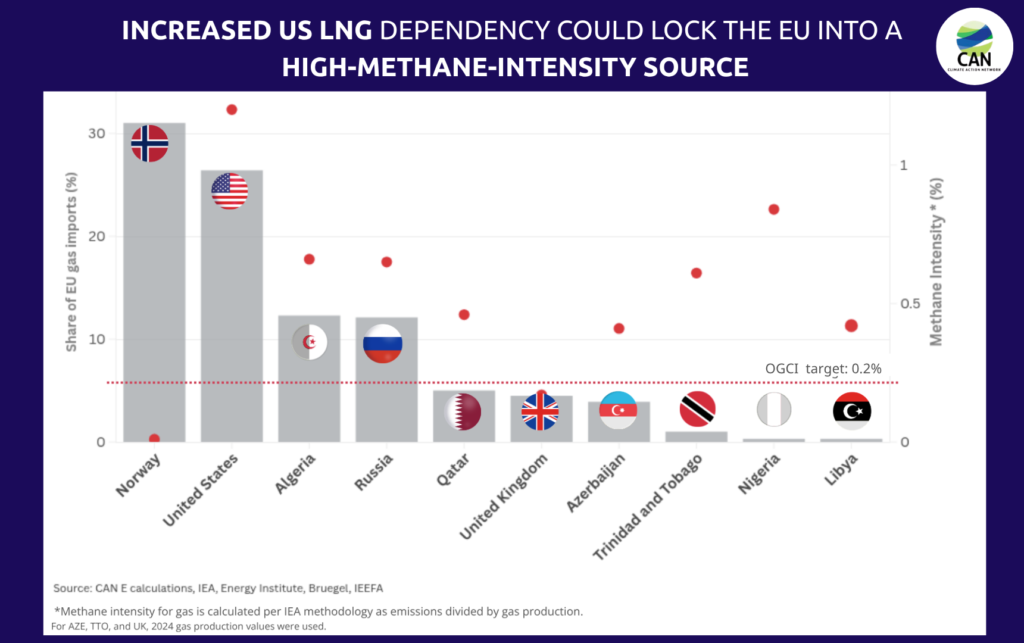
Even when cheaper renewable electricity is available, fossil gas still continues to set electricity prices in European wholesale markets, leaving consumers exposed to volatile global gas prices. Reliance on expensive LNG imports only exacerbates this problem.
Energy security starts with using less fossil gas
The EU already knows what works.
The European Commission in mid May announced its AccelerateEU catalogue of measures, which rightly recognises the central role of demand reduction in strengthening Europe’s energy security, affordability and strategic autonomy. According to the Commission, these measures could reduce fossil gas demand by 10-15 bcm annually.
This is a welcome step. However, it represents only part of what is required. Meeting REPowerEU’s objective of reducing annual gas demand to 190 bcm by 2030 requires annual reductions of around 30-34 bcm. Renewable heating solutions can make a substantial contribution toward this goal. According to Clean Heat Europe, the full deployment of solar thermal, heat pumps, and district heating systems could reduce Europe’s annual demand for imported fossil gas by up to 74.6 bcm by 2030.
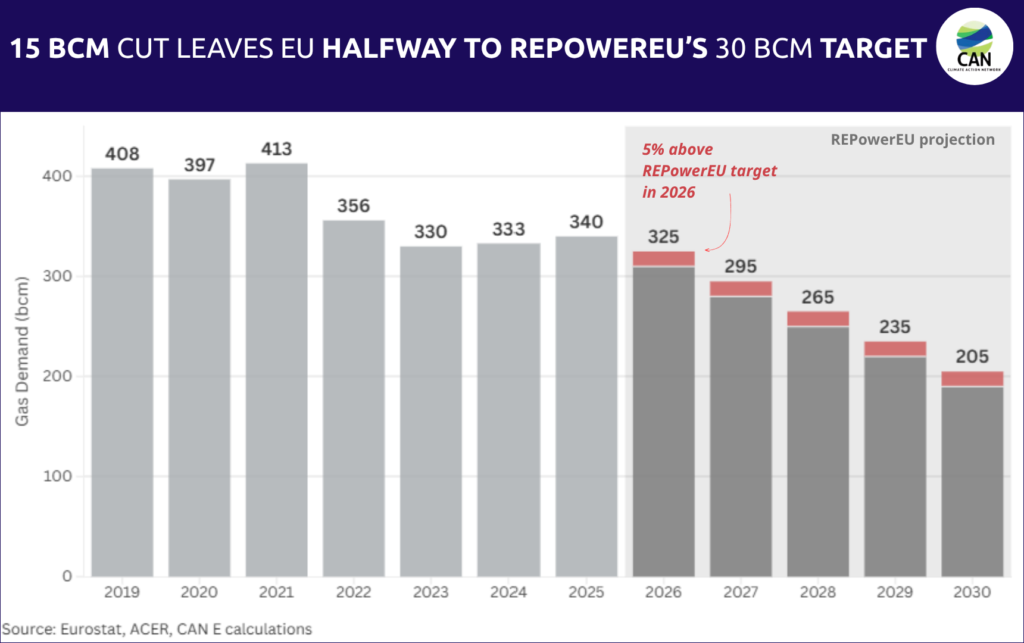
Voluntary reductions could deliver results, but voluntary measures alone are unlikely to provide the long-term certainty needed to transform Europe’s energy system.
As the European Commission prepares the revision of the EU Energy Security Framework in early autumn, it has a unique opportunity to place ending fossil fuel dependency at the heart of Europe’s energy security architecture.
The revised framework should include a comprehensive Fossil Gas Exit Strategy that establishes a binding annual fossil gas demand reduction target of 7-8% as a central pillar.
Such a trajectory would provide clear direction for governments, investors and industry while ensuring that short-term geopolitical concerns do not lock Europe into decades of new fossil fuel dependence.
As CAN Europe highlighted in its letter to Ministers ahead of the 26 June Energy Council, a sustained annual reduction pathway, combined with accelerated deployment of renewable energy, electrification, energy efficiency improvements, storage and demand-side flexibility, could put Europe on track to fully phase out fossil gas before the end of the next decade.
A genuine Fossil Gas Exit Strategy
Gas demand reduction must remain the foundation of Europe’s strategy, but it should be supported by complementary actions.
First, the EU should develop a roadmap to phase out LNG import dependency, with particular focus on reducing reliance on US LNG by 2032. The legal commitment to end Russian fossil gas imports by 2027 should serve as a blueprint for a broader strategy that avoids replacing one fossil gas dependency with another.
Second, the EU must maintain ambitious implementation of the EU Methane Regulation. Reducing methane emissions is not only a climate imperative; it is also an energy security measure. According to the International Energy Agency, eliminating methane leaks and ending non-emergency flaring worldwide could recover around 200 bcm of fossil gas annually, which is currently wasted.
Yet the Regulation is now facing increasing political pressure, with calls to weaken or delay its implementation framed as an energy security concern. A recent joint letter from civil society organisations to EU leaders directly responds to these attempts, urging the Commission to hold the line and ensure full and timely implementation of the Regulation rather than reopening or postponing its provisions.
The debate is not only about one regulation, but about the direction Europe is taking: whether the EU continues managing fossil fuel dependence, or starts to end it.
EU’ s moment to choose
More than 40 civil society organisations have called on the European Commission to use the upcoming revision of the Energy Security Framework to put an end to the EU’s fossil fuel dependence.
They are right.
The EU’s long-term security will not come from signing new LNG contracts or finding new gas suppliers.It will come from ending the need for gas in the first place.
The past four years have shown that demand reduction works. The question now is whether the EU will build on that success with a genuine Fossil Gas Exit Strategy, or remain trapped in a cycle of climate disruption, geopolitical instability and volatile energy prices.