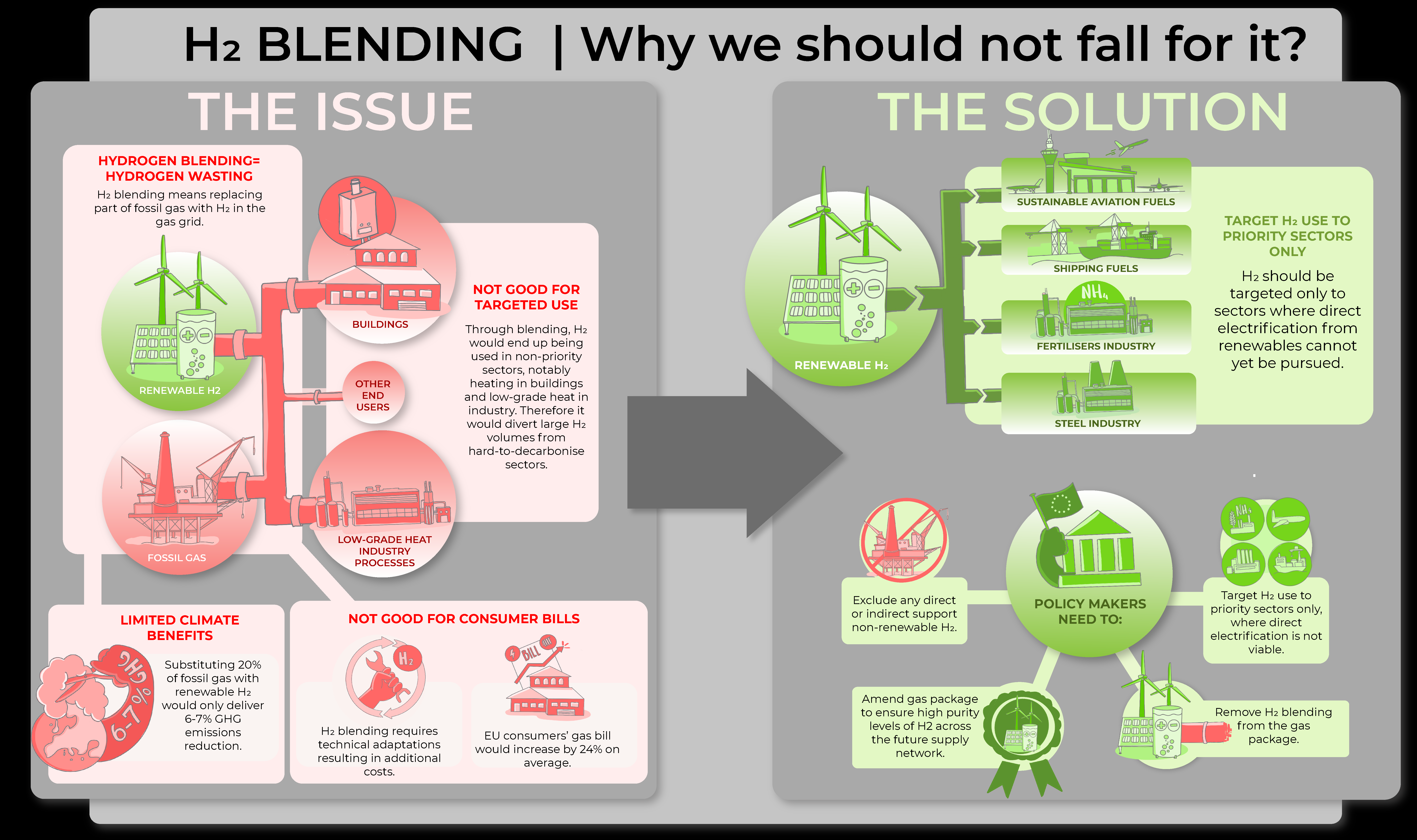
What is the issue with Hydrogen Blending?
- Waste of a scarce resource of renewable energy: large quantities of renewable hydrogen would be needed even at low levels of blending, potentially diverting large amounts of renewables-based electricity from more efficient uses, such as direct electrification of heating in buildings and road transport. To produce renewable hydrogen additional renewable electricity generation capacities are needed, coming on top of those renewables needed to electrify sectors such as transport and heating or parts of industry.
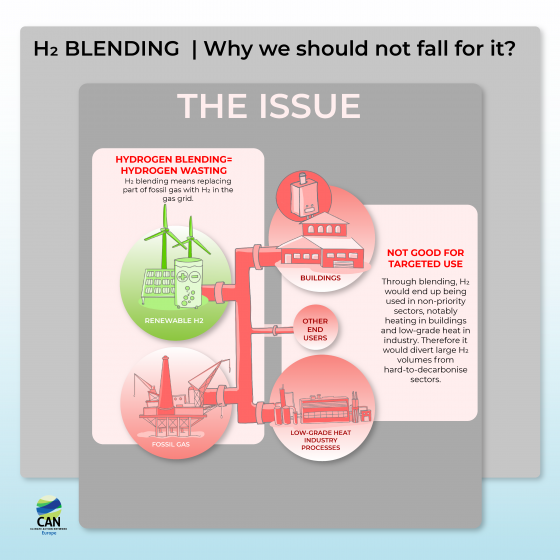
- Not good for targeted use: once blended into the gas grid, hydrogen would end up being delivered to all types of users connected to the gas grid, notably households. This would not be the most efficient as it would hinder its targeted use in its pure form (i.e. 100% hydrogen) in those sectors which need hydrogen the most to decarbonise, i.e. those sectors that cannot use renewables-based direct electrification such as steel production or long distance transport aviation or maritime.
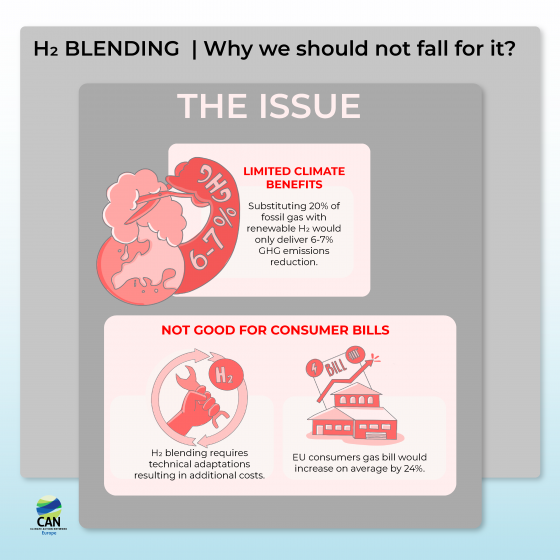
- Limited climate benefits: hydrogen blending would also bring about negligible reductions in greenhouse gas emissions when compared to the direct use of renewable hydrogen. For example, substituting 20 Vol-% of fossil gas with renewables-based hydrogen would only result in 6% to 7% greenhouse gas emissions savings. Instead, far greater reductions could be achieved through direct and targeted use, in selected segments of the transport sector and industrial applications
- An extra burden on consumer bills: blending of hydrogen in the gas grid would require technically complex adjustments which in turn translate into rapidly increasing costs for consumers, as increasing shares of hydrogen are blended in the gas grid.
What should be the solution?
- Hydrogen in the energy mix should be only 100% renewable and produced domestically. If imported, sustainability and additionality requirements must be in place.
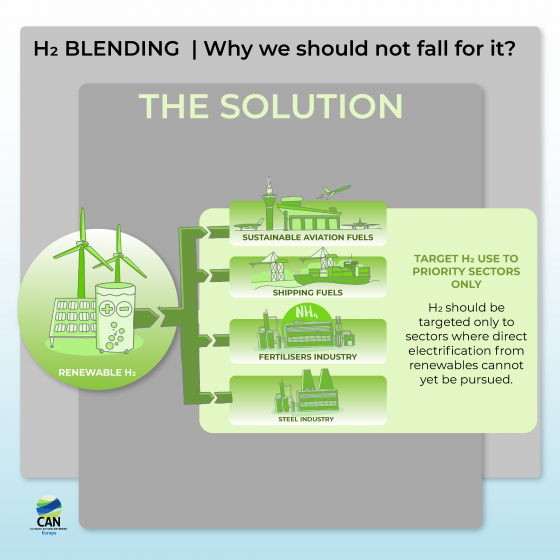
- Targeting renewable hydrogen only to sectors that need it the most: hydrogen blending should be targeted to heavy industry sectors that are normally difficult to electrify with other renewable sources, such as certain industry sub-sectors (e.g. steelmaking and chemicals) and transport sub-sectors (e.g. aviation and shipping).
- Amending the EU’s Gas Package that is part of the ‘Fit for 55’ proposed legislation, to ensure high purity levels of renewable hydrogen for future supply networks.
- The Gas Package must exclude hydrogen blending.
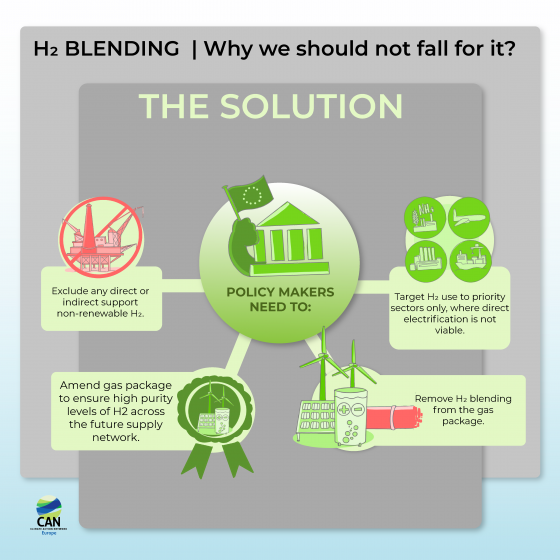 Download full Hydrogen Blending infographic here.