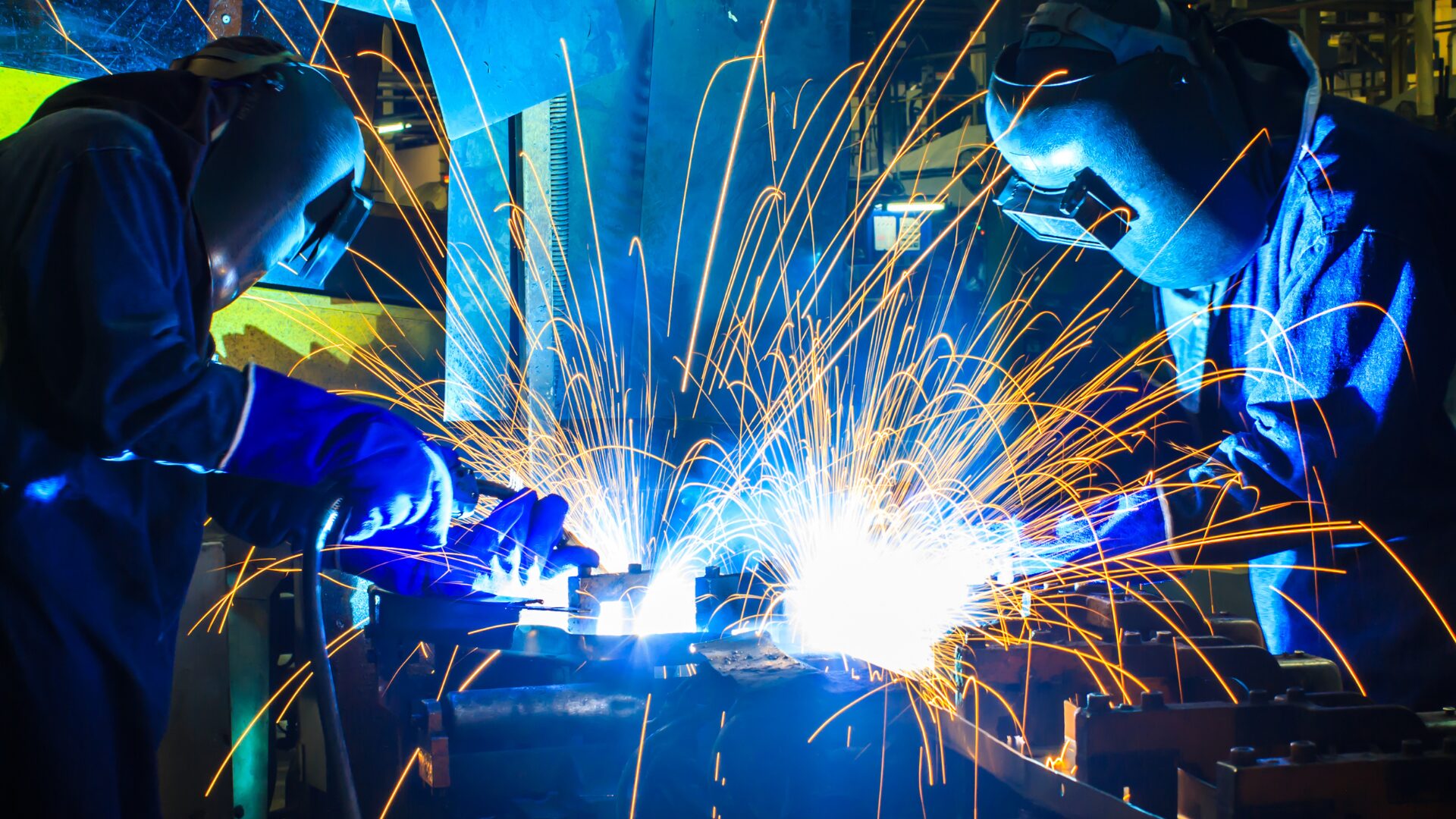
Industry’s contribution to EU climate ambition targets, especially that of becoming a climate-neutral continent, is an important issue to address at EU level. Industry – including factories, power plants, intensive livestock rearing and refineries – is the source of more than half of the EU’s greenhouse gas emissions and 75% of hazardous waste production.
Large-scale industrial activities are one of the main contributors to air pollution which leads to 456,000 premature deaths in Europe every year. At the same time, industry reports that they release about 4,600 tonnes of heavy metals every year into air, water and soil. That includes ecotoxic arsenic and neurotoxic lead and mercury. Their main source is coal combustion.
The EU’s Emissions Trading System (ETS) and Effort Sharing Regulation (ESR) are the main tools developed so far to address industry greenhouse gas emissions, but more tools are needed to ensure that industry can contribute effectively to the various objectives agreed in the European Green Deal to ‘transform the EU into a fair and prosperous society, with a modern, resource-efficient and competitive economy where there are no net emissions of greenhouse gases in 2050 and where economic growth is decoupled from resource use’.
Our industry work ranges across the ETS and ESR, and more recently has expanded to take in the EU’s Industrial Strategy and Circular Economy Action Plan. This includes the potential introduction of a carbon border adjustment mechanism which is meant to address the threat of industrial production leaving the EU because of the cost differences between EU production because we have the ETS and the rest of the world which does not have a similar carbon pricing mechanism.
Through our industrial transformation work, we aim to ensure that EU policies and tools frame industry’s efforts to go beyond shifting to renewables and climate capture and storage/use, and that industry steps up its efforts to avoid irreversible damage through climate change, biodiversity loss and other interlinked impacts. Industrial transformation means developing and strengthening synergies on actions to address multiple environmental and social challenges.
Read more:
Can Europe’s Position On Carbon Capture And Storage And/Or Use (CCSU)
Key priorities for a greener EU Industrial Strategy
News & Publications
-
Letters & Statements
CAN Europe Letter to Heads of Cabinets of the European Commission on the revision of the Emissions Trading System (ETS) Directive
-
Reports & Briefs
Making Polluters Pay: What European citizens expect from the EU Emissions Trading System
-
Letters & Statements
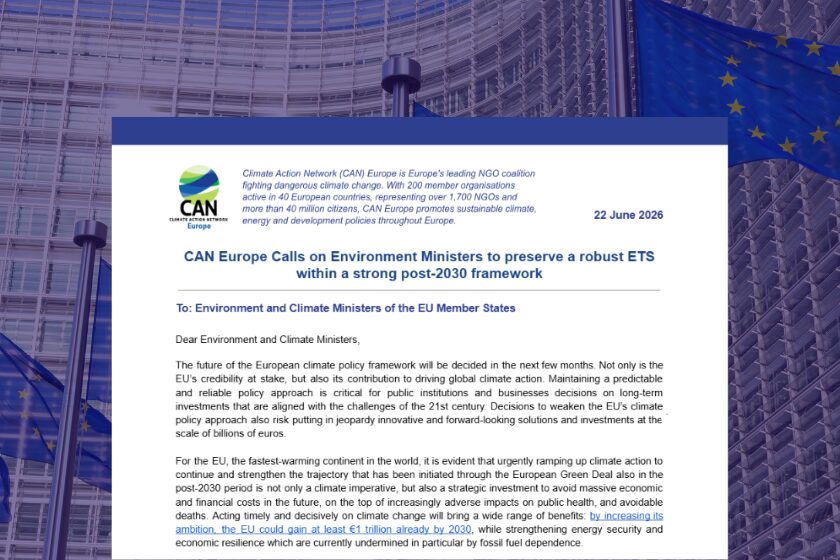
Letter to Environment Ministers to preserve a robust ETS within a strong post-2030 framework
-
Letters & Statements
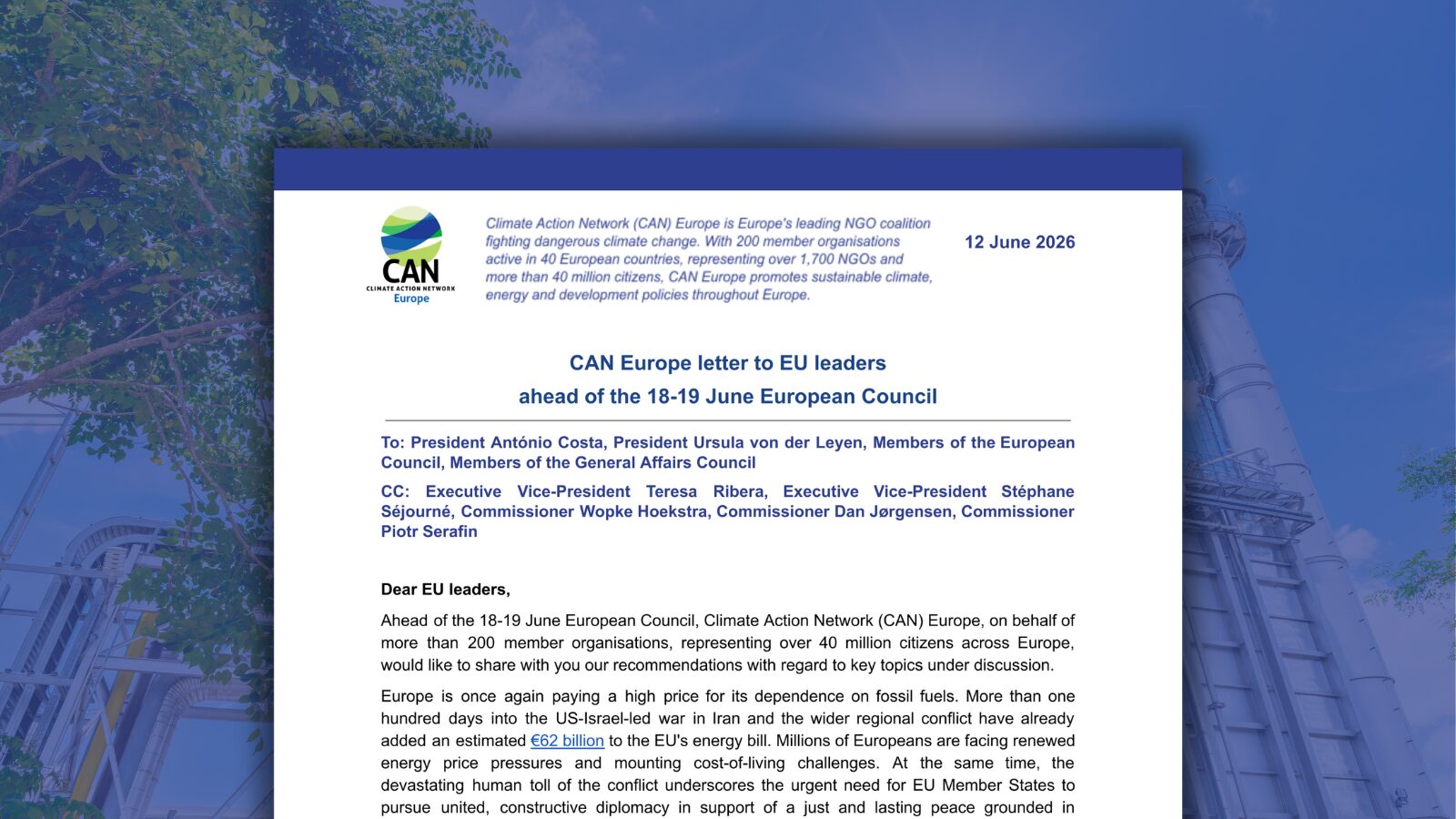
CAN Europe letter to EU leaders ahead of the European Council on 18-19 June
-
CAN Europe Positions
CAN Europe position on the EU Emissions Trading System (ETS)
-
Letters & Statements
CAN Europe letter to EU leaders ahead of the 23-24 April informal European Council