The devastating effects of climate change are no longer a vague possibility in the distant future, but a tangible reality that we are experiencing today. The climate crisis knows no boundaries and its impacts are affecting us all, but not equally. The most vulnerable countries have contributed the least to this crisis, yet they find themselves on the frontlines of it. Climate change and biodiversity loss disproportionately affect those least responsible for causing it: the world’s poorest 20%, most of whom are women, are responsible for less than 3% of global emissions.
In addition, many people still lack equitable access to scarce natural resources, including safe and sustainable energy.
Choosing pathways to sustainable development means taking an integrated approach to meeting human development as well as climate, natural systems and biodiversity goals, and living within our planetary boundaries.
Climate change and sustainable development are intrinsically linked; without acting on climate change, global development objectives will be reversed, and without pursuing development pathways that are truly sustainable, we will not avoid runaway climate change.
The UN 2030 Agenda for Sustainable Development, launched in 2015, set out a range of 17 sustainable development goals for both developed countries and developing countries.
Grounded in the Universal Declaration on Human Rights and international human rights treaties and emphasising the responsibilities of all states to respect, protect and promote human rights, it envisages “a world of universal respect for human rights and human dignity, the rule of law, justice, equality and non-discrimination”.
There is a strong emphasis on the empowerment of women and of vulnerable groups such as children, young people, persons with disabilities, older persons, refugees, internally displaced persons and migrants.
In the Paris Agreement countries agree to respect, promote and consider their respective obligations on human rights, the right to health, the rights of indigenous peoples, local communities, migrants, children, persons with disabilities and people in vulnerable situations and the right to development, as well as gender equality, empowerment of women and intergenerational equity in their climate action. The UNFCCC Gender Action Plan also aims to advance knowledge and understanding of gender-responsive climate action as well as women’s full, equal and meaningful participation in the UNFCCC process.
To deliver on sustainable development and support just transformation of societies, the European Union needs to take an integrated approach to the Paris Agreement, biodiversity objectives, and Agenda 2030 across its development and climate finance, and across all international and domestic policies. All European policy needs to be assessed for coherence with sustainable development in developing countries to ensure it does not have negative impacts.
In supporting developing countries and their communities to take climate action, the EU’s development and climate finance should strengthen gender equality, prioritise approaches which protect and restore nature, and support human rights-based approaches to climate action plans.
Supporting the circular economy, green and smart cities, and decentralised community-owned renewable energy projects run by local and micro-level actors offer future-proof sustainable development pathways which work for people and the planet.
In developed economies, such as the EU, sustainable development should translate into ambitious domestic policies that drastically move our economies away from high-carbon consumption. This shift needs to happen across numerous sectors in the EU; from energy to agriculture, and from finance to infrastructure.
News & Publications
-
Letters & Statements
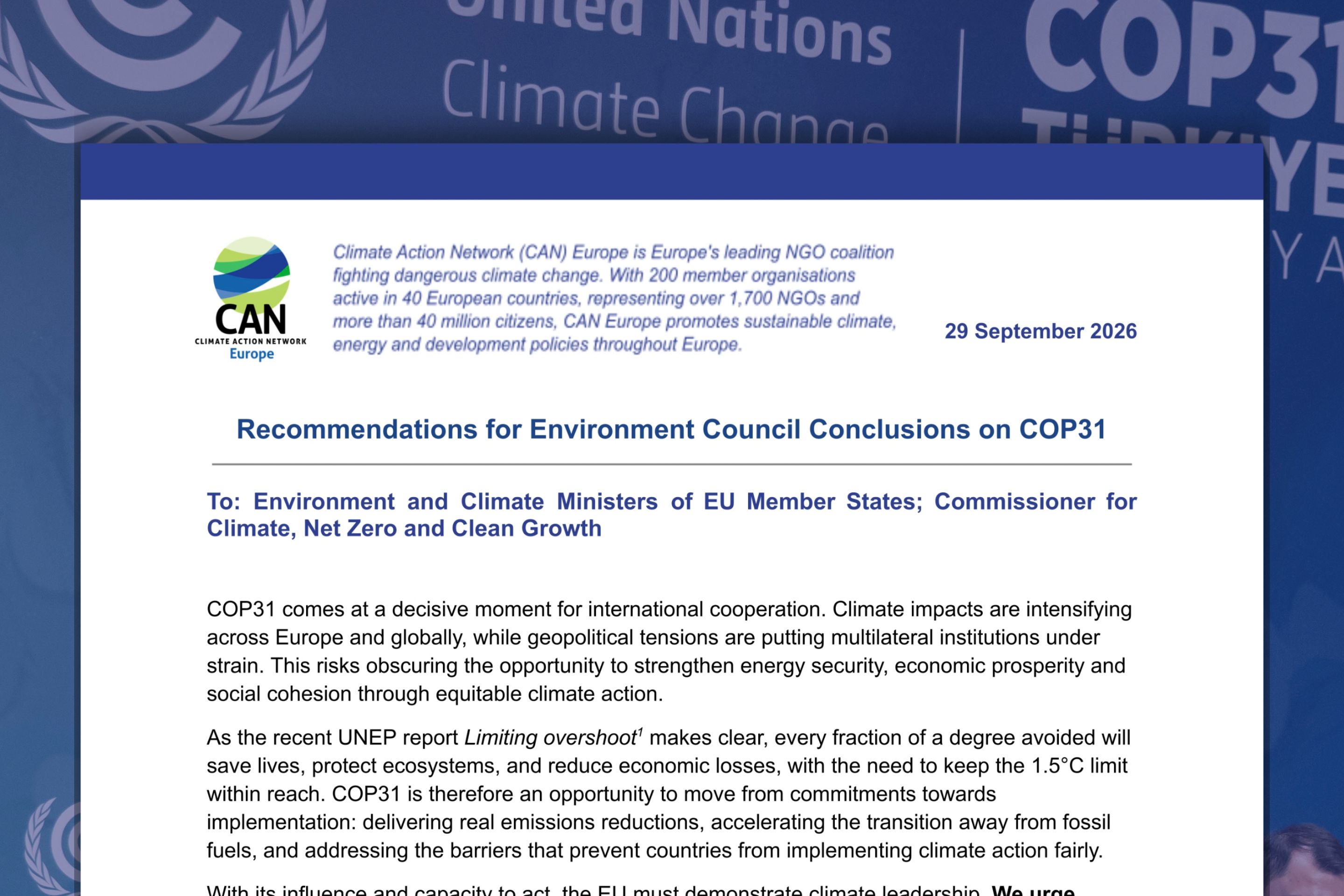
Letter: Recommendations for Environment Council Conclusions on COP31
-
Letters & Statements
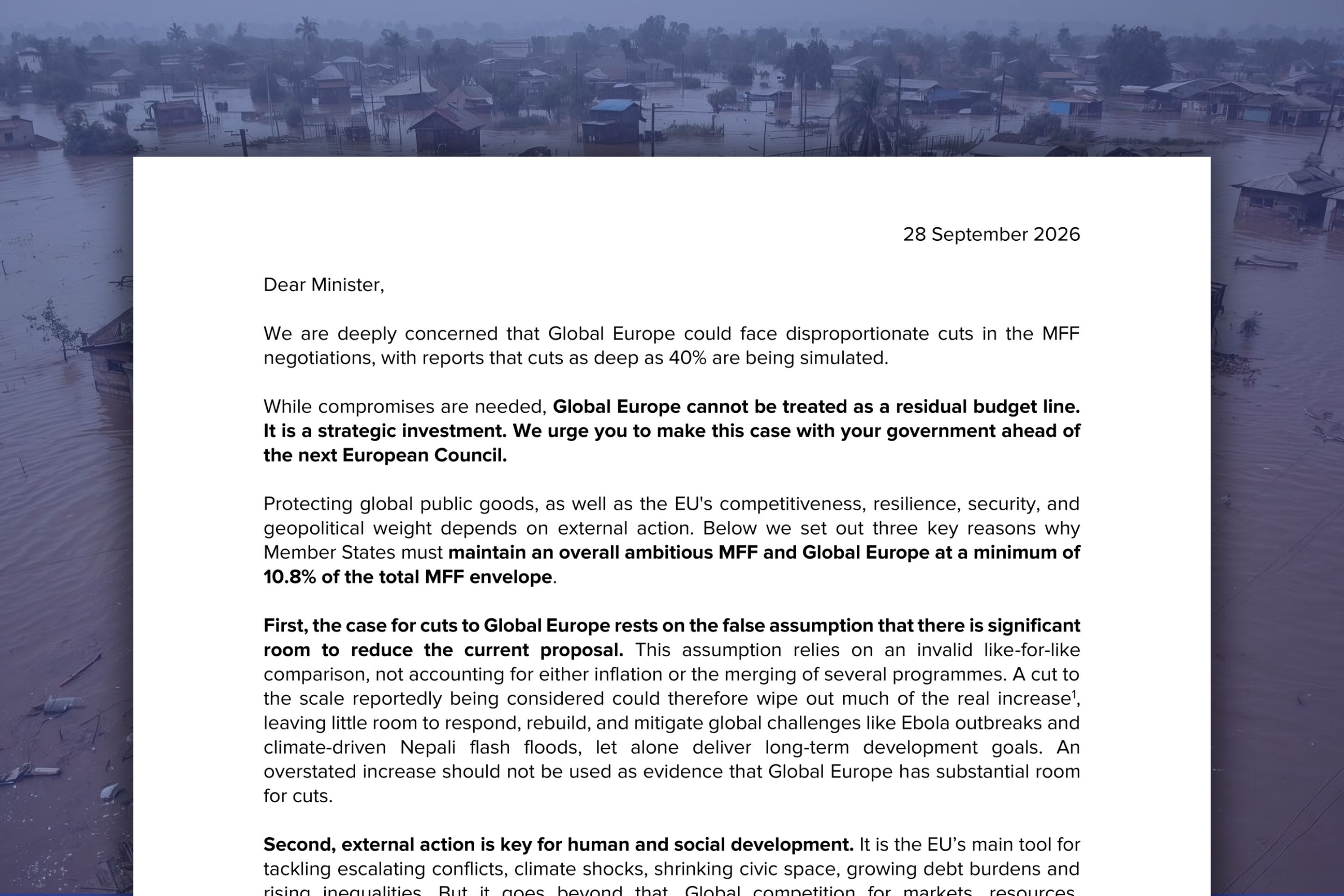
Joint Letter to EU Development Ministers: Global Europe is not a residual budget line
-
Reports & Briefs
Global Europe: A blueprint for long-term prosperity – analysis of the European Commission proposal
-
Letters & Statements
JOINT STATEMENT: CLIMATE-JUST CELAC-EU PRESIDENTIAL SUMMIT
-
Reports & Briefs
Policy Briefing: Recommendations for the EU’s international climate and energy partnerships
-
Reports & Briefs
COP28: CAN Europe demands saying no to greenwashing, distractions and unproven solutions