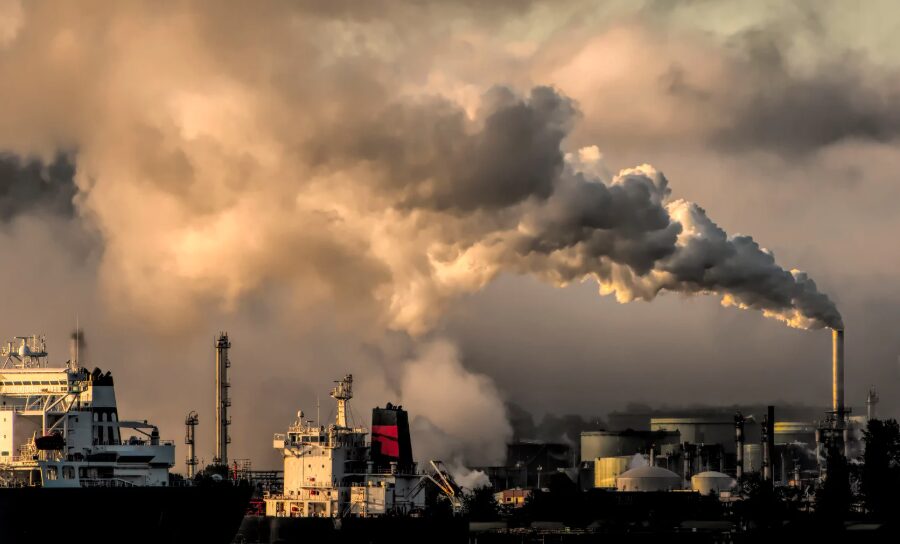
Burning coal for energy fuels catastrophic climate change, impacts people’s health and prosperity, pollutes the environment and water, ruins economies by draining resources and crowding-out other economic activities, including accelerated deployment of renewables.
It is one of the main drivers of climate change because coal burned for energy purposes is the most greenhouse gas intensive fossil fuel. Despite this, still in 2022 36% of the world’s electricity was still generated from coal. Globally, coal causes over 15 Gigatons of CO2 per year and those emissions are still expected to grow.
According to scenarios prepared to calculate how the world should reduce emissions in order to stay within 1.5 degrees limit, in line with the IPCC 1.5 Report, halting the use of coal for power generation is the single most important source of emissions reductions. Yet, despite this knowledge, the world is not on track for the steep reductions in coal power necessary to meet the Paris climate agreement.
Europe is running out of time
Phasing out coal is the low-hanging fruit when it comes to scaling up emission reductions in Europe. The continent and EU can become coal phase out world leader setting the example for other countries. In order to achieve a 1.5°C world, the EU and all OECD countries must phase-out coal by 2030, at the latest. The pathway is clear: EU power sector must become coal-free by 2030. Multiple reports show that this is feasible, even in emerging economies, like Turkey.
If we are to comply with what was agreed in Paris, building new coal plants in Europe cannot be a matter of debate.
Running out of health
Coal’s overall human and ecological toll is staggering. Mining and burning coal causes dangerous emissions such as sulfur dioxide, nitrogen oxide, dust particles and mercury emissions, and contaminates soil, air and water. See our reports Europe’s Dark Cloud and Last Gasp to read about health impacts. We also describe The impacts of coal-based energy policy on water in Turkey.
Air and water pollution from coal plants knows no borders. As such, coal plants in any one country are a problem for all of us, affecting public health even in countries without coal plants. Check our Chronic Coal Pollution and Real Costs of Coal: Mugla reports to see how the coal plants in the Western Balkans and Turkey exacerbate this issue. Each year we know increasingly more on health benefits and saved health costs related to phasing out coal power generation (see data for Poland and Turkey). We need to act on it!
Running out of money
The coal industry is unable to compete with buoyant renewables, which are cheaper to operate, cleaner and more flexible. The coronavirus crisis has shown that coal’s goodbye to Europe is sooner than expected. Even gas-related energy crisis in 2022/2023 caused by Russian invasion on Ukraine have not reversed this trend. But numerous subsidies still keep this dying industry alive by pumping billions of taxpayers’ euros. Taking responsibility for the management of coal’s comprehensive and final departure means no more hand-outs to the coal industry. Nor should the public money support other dead-ends in coal regions, such as fossil gas.
All the funding accessible for the coal regions should support a just and rapid transition away from fossil fuels and towards energy efficiency and renewables. It also means all countries with coal regions must immediately design and implement just transition plans and strategies for the communities not to be left behind. See out Just Transformation Vision, where we lay out what need to be done to assure justice during societal transformation toward climate neutrality. Here, you can read how first attempts are performed in Western Balkans, which unlike the EU does not yet have the dedicated Funds to support the process, like EU Just Transition Fund. Besides, here you can read the report takes a local perspective on just transition, zooming in the case of Milas, a coal region in Turkey which is one of few countries with no coal exit plan.
CAN Europe strongly supports the phase out of coal through its work with Beyond Fossil Fuels campaign secretariat, integrating the coal debate in our regular policy work, and by supporting our members and allies in Turkey and the Western Balkans.