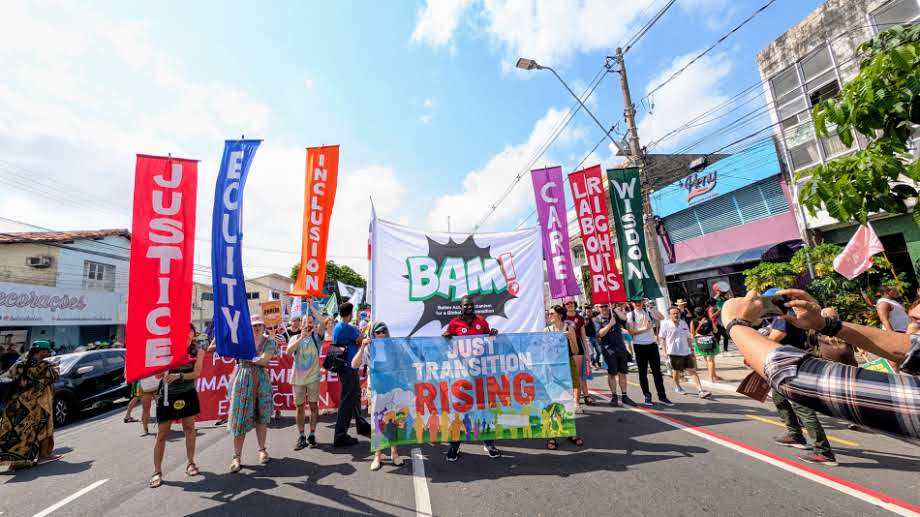
The climate crisis is a global crisis as emissions anywhere affect people and biodiversity everywhere. To respond, a rapid decarbonisation of our economies across the world is required. However some countries have a higher responsibility for climate change, and greater capacity to act, than others. Climate impacts also fall unequally across and within countries. This is why internationally coordinated cooperation and support is needed, that is in line with equity. Countries negotiate and agree on climate action under the United Nations Framework Convention on Climate Change, the UNFCCC.
With the adoption of the Paris Agreement, the UNFCCC COP21 Summit in Paris in December 2015 delivered an agreement by all countries on international climate action. For the first time in history all countries agreed to take drastic action to protect the planet from climate change, to jointly pursue efforts to limit temperature rise to 1.5°C, and to rapidly reduce emissions towards net zero in the second half of the century.
In addition, the Paris Agreement created a framework for global climate policy by providing common rules for transparency and accountability, and the requirements for regular 5-year revision of countries’ targets and commitments. The global stocktakes set in the Paris Agreement take place every five years, with the first Global Stocktake having taken place at COP28 in 2023. These are vital global moments to assess the adequacy of countries’ joint and individual action toward the long term goals of the Paris Agreement. Following these stocktakes all countries are required to set their new greenhouse gas reduction targets (nationally determined contributions) for the next five year period.
Countries’ current climate targets (NDCs) are inadequate and would lead to dangerous warming of 2.8°C.
The first Global Stocktake at COP28 resulted in an assessment of how well countries are delivering at global level on the long term goals adopted in the Paris Agreement to pursue efforts to limit temperature increase to 1.5°C, to build resilience to climate impacts and to scale up finance and support. The Intergovernmental Panel on Climate Change (the IPCC) outlined in its Sixth Assessment Report Special Report on 1.5°C that current global CO2 emissions need to be reduced by 43% by 2030 to have a chance of keeping temperature rise at 1.5°C, as well as underlining the urgency of near term action. The first Global Stocktake found that we are falling dangerously short, and identified critical actions needed by 2030 to help course correct. This included Parties agreeing to global energy targets for the first time: transitioning away from fossil fuels in energy systems, tripling renewable energy capacity globally and doubling the global average annual rate of energy efficiency improvements by 2030.
For the EU’s climate and energy policies, an increase in ambition and action is needed in all sectors, to reflect an equitable share of the global carbon budget. Reduction of global emissions to net zero by mid-century requires that in the EU most sectors will be fully decarbonised within the next couple of decades, and CAN Europe calls for the EU to reach net zero greenhouse gas target latest by 2040 and to achieve at least -65% gross emission reductions by 2030, compared to 1990 levels. The EU also needs to set timelines for fully phasing out the use of coal by 2030, gas by 2035 and oil by 2040 to to support global fossil fuel phaseout, alongside the goals for renewable energy capacity and energy demand reduction and efficiency as well as stepping up finance, cooperation and support.
In addition to the urgent domestic emission reductions that the EU is required to do at home, the EU has a responsibility to help other countries financially to reduce their emissions and to adapt to the impacts of climate change.
Engaging with other major economies, country groups, and climate vulnerable countries through climate diplomacy and bilateral partnerships will also be key for the EU to ensure stronger global climate ambition. In recent years the EU has been stepping up its engagement with the USA, China, India and the Latin American and Caribbean region. A more equitable approach to partnerships which do not only reflect EU resource interests, but instead focus on country and community ownership of the transition as well as centring human rights and the rights of Indigenous Peoples must be key.
CAN Europe has been working on the UN climate negotiations for more than 30 years and continues to engage actively and in cooperation with CAN International and other regional CAN nodes in the UNFCCC process.
News & Publications
-
Letters & Statements
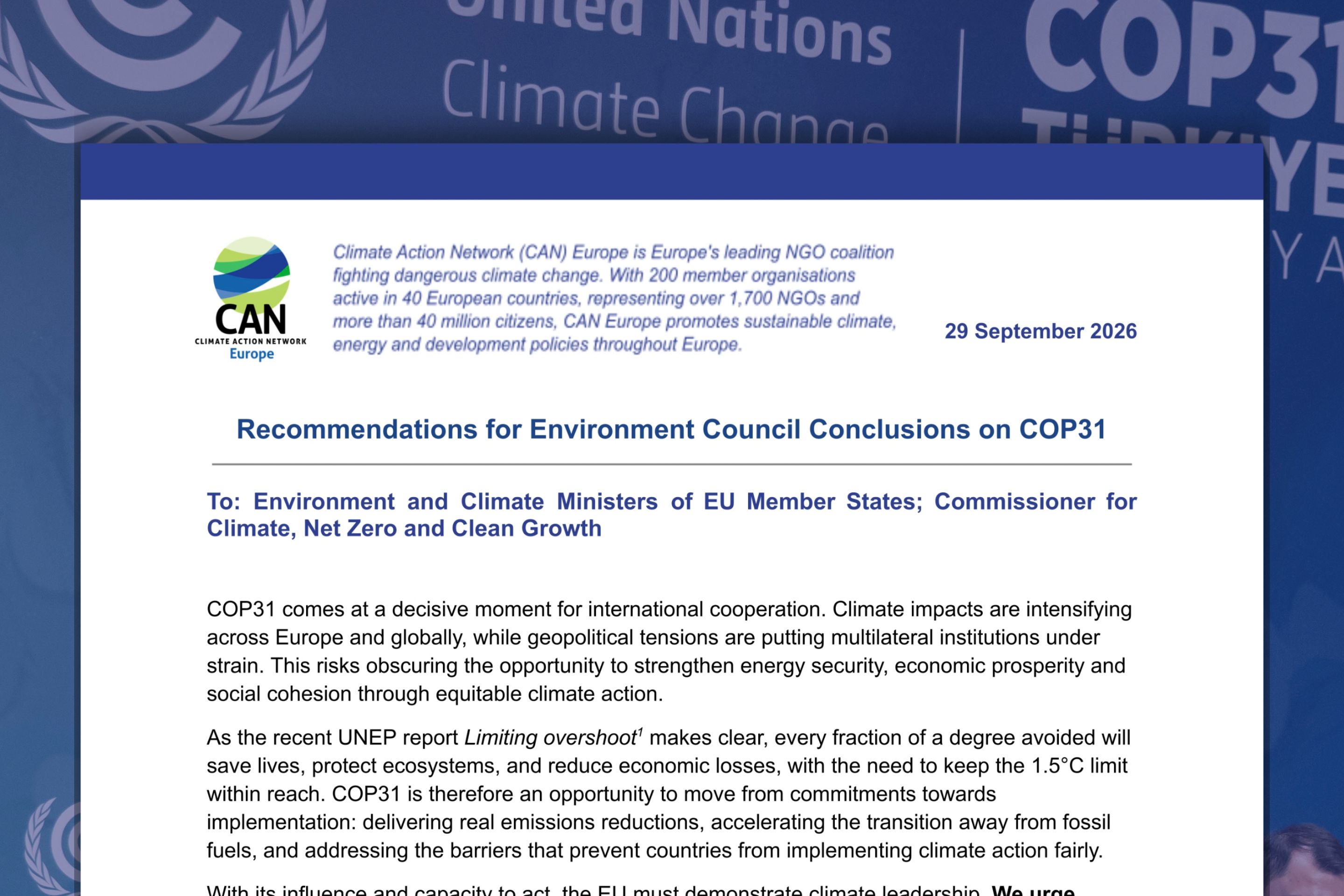
Letter: Recommendations for Environment Council Conclusions on COP31
-
Letters & Statements
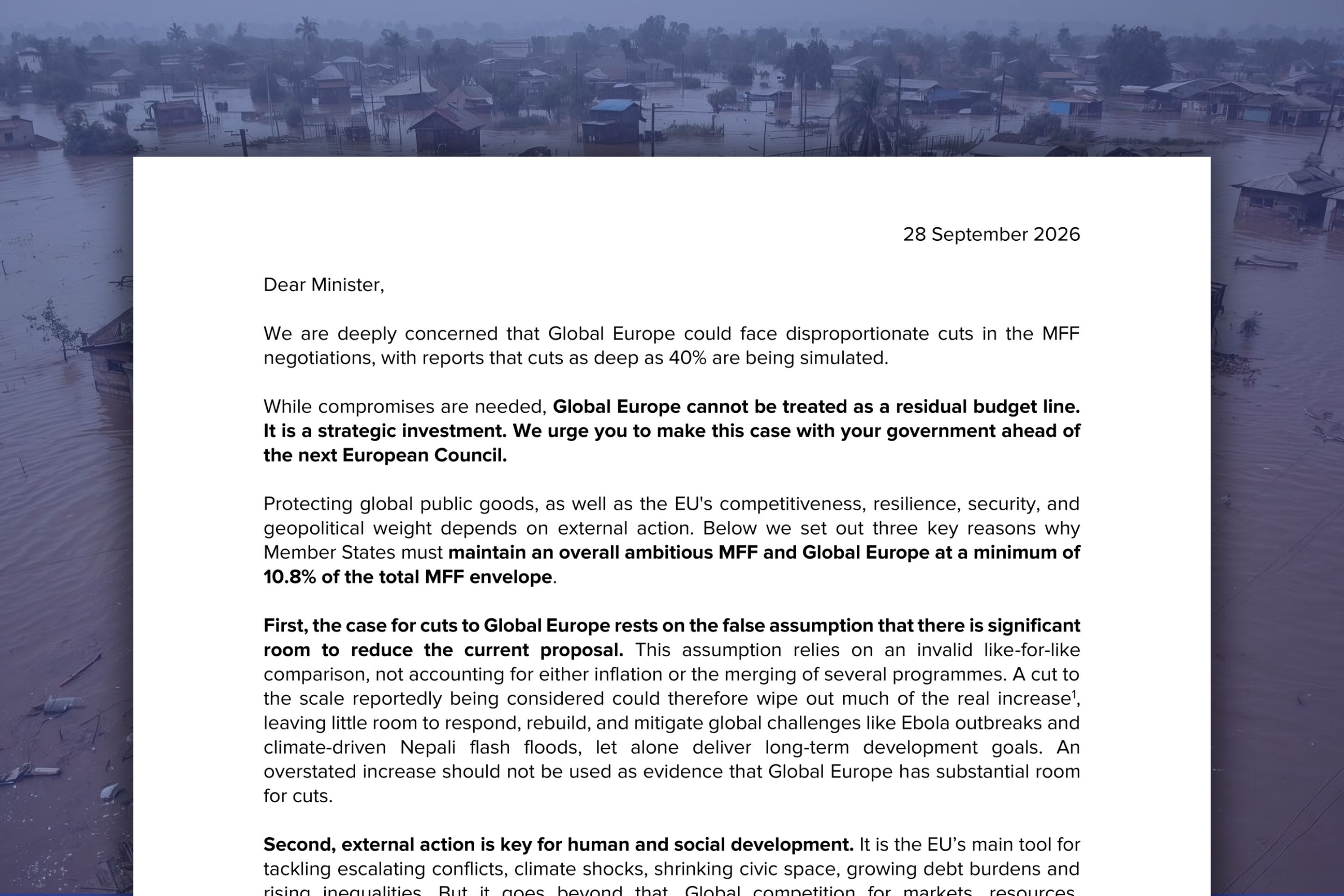
Joint Letter to EU Development Ministers: Global Europe is not a residual budget line
-
Reports & Briefs
Global Europe: A blueprint for long-term prosperity – analysis of the European Commission proposal
-
Letters & Statements
JOINT STATEMENT: CLIMATE-JUST CELAC-EU PRESIDENTIAL SUMMIT
-
Reports & Briefs
Policy Briefing: Recommendations for the EU’s international climate and energy partnerships
-
Reports & Briefs
COP28: CAN Europe demands saying no to greenwashing, distractions and unproven solutions