CAN Europe position on COP31
COP31 must turn climate promises into action. Phase out fossil fuels, scale up public finance and remove the barriers holding countries back. Make the transition fast, fair and real. At COP31, the EU must use its political and economic power to turn global commitments into delivery.
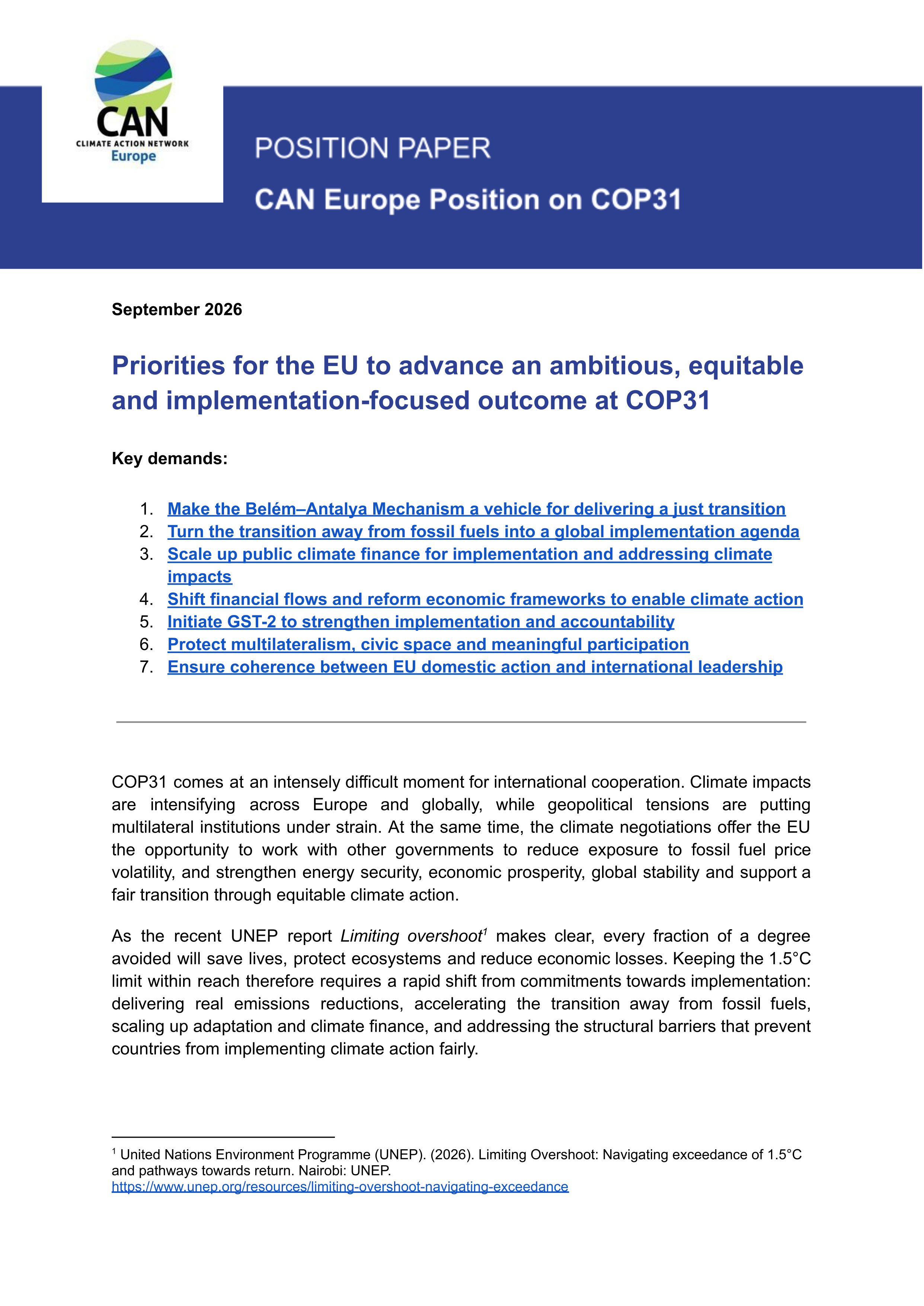
COP31 comes at an intensely difficult moment for international cooperation. Climate impacts are intensifying across Europe and globally, while geopolitical tensions are putting multilateral institutions under strain. At the same time, the climate negotiations offer the EU the opportunity to work with other governments to reduce exposure to fossil fuel price volatility, and strengthen energy security, economic prosperity, global stability and support a fair transition through equitable climate action.
As the recent UNEP report Limiting overshoot makes clear, every fraction of a degree avoided will save lives, protect ecosystems and reduce economic losses. Keeping the 1.5°C limit within reach therefore requires a rapid shift from commitments towards implementation: delivering real emissions reductions, accelerating the transition away from fossil fuels, scaling up adaptation and climate finance, and addressing the structural barriers that prevent countries from implementing climate action fairly.
COP31 in Antalya, 9–20 November 2026, should build on the outcomes of COP30 and translate them into practical implementation. Given its historical responsibility and capacity, the EU must demonstrate leadership.
COP31 must move the Paris Agreement from commitments towards effective implementation. The first Global Stocktake (GST-1) established the direction of travel for mitigation, adaptation and financing, and included the need for a just, orderly and equitable transition away from fossil fuels. The challenge now is to translate these outcomes into action and address the structural barriers preventing countries from doing so.
The EU should support an outcome at COP31 that overall:
- strengthens implementation of the Paris Agreement and the outcomes of GST-1;
- ensures climate action is grounded in science, equity, CBDR-RC (Common but Differentiated Responsibilities and Respective Capabilities), justice and human rights;
- addresses implementation gaps, including gaps in finance, technology, capacity and other means of implementation;
- strengthens meaningful participation of civil society, Indigenous Peoples, workers, youth, women and affected communities;
- protects civic space and reinforces an effective, inclusive, transparent and accountable multilateral climate regime; and
- ensures that implementation efforts are responsive to the different circumstances, capacities and needs of developing countries.
CAN Europe COP31 position is divided under the following headlines:
- Make just transition real
- Turn fossil fuel phase-out plans into action
- Make public climate finance promises a reality
- Fix the financial system holding climate action back
- Make the next Global Stocktake about delivery
- Protect climate cooperation and civic space
- Match EU climate leadership abroad with action at home
Read the full CAN Europe COP31 position here.
COP31 latest
-
Letters & Statements
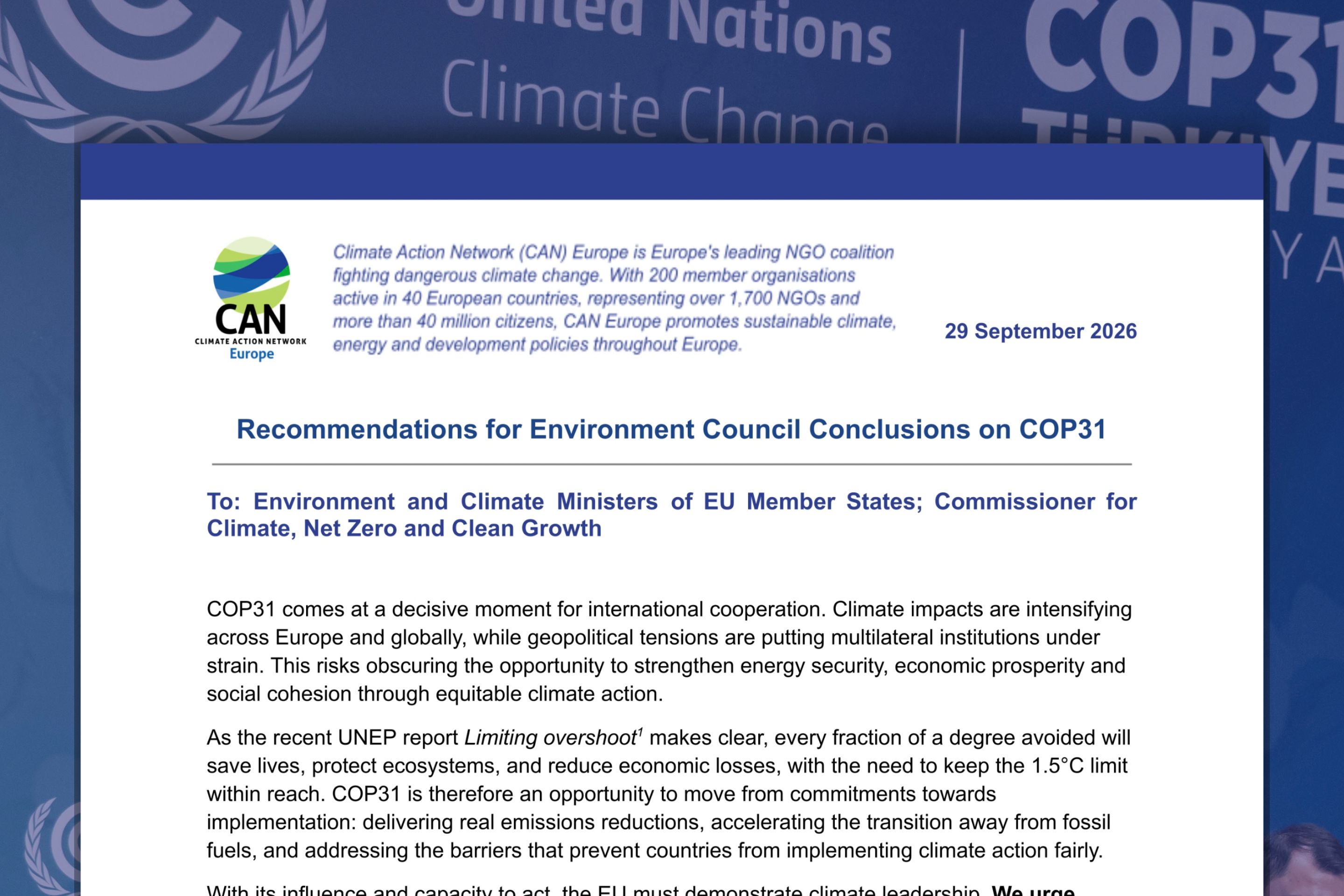
Letter: Recommendations for Environment Council Conclusions on COP31
-
Letters & Statements
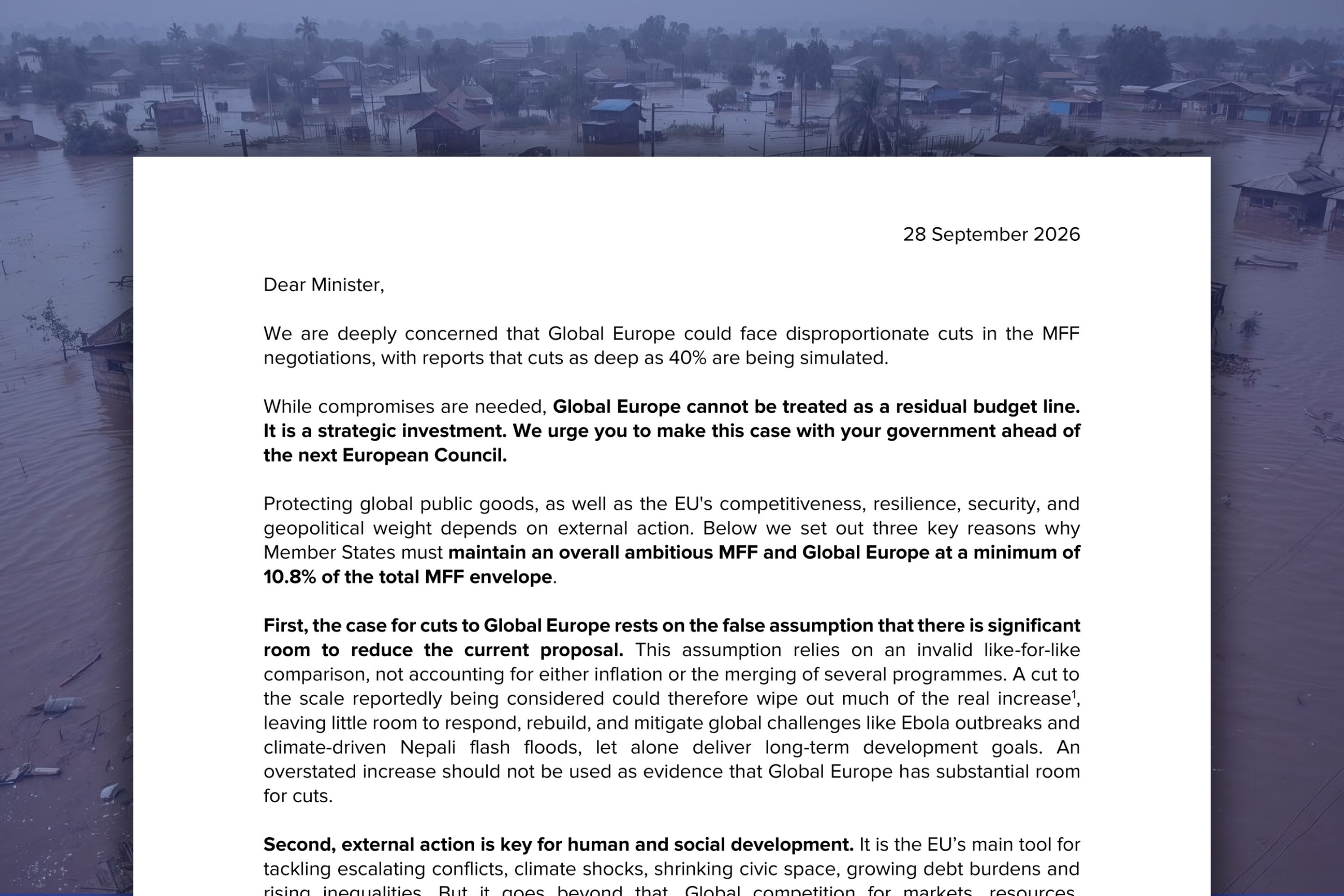
Joint Letter to EU Development Ministers: Global Europe is not a residual budget line
-
Letters & Statements
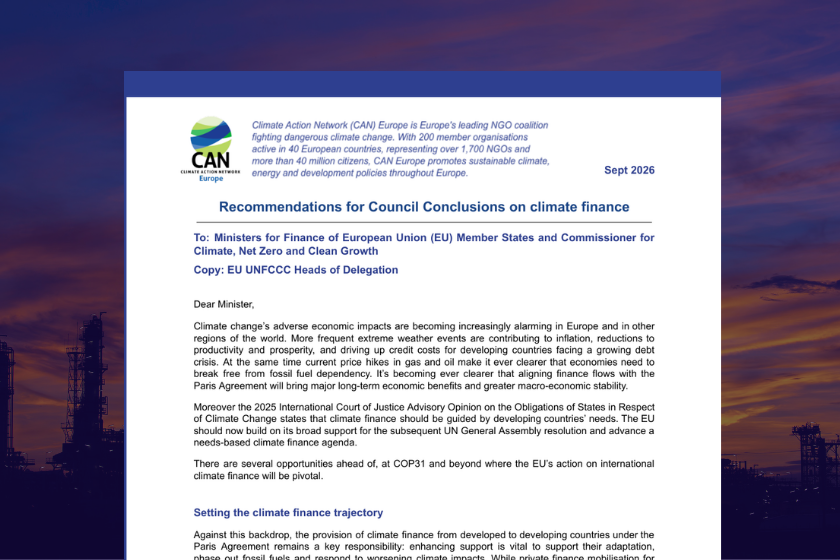
Letter to EU Finance Ministers on international climate finance ahead of COP31