Setting targets for greenhouse gas emission reductions is a key driver for climate action and vital to ensure the world is on track to avoid catastrophic climate change.
In 2015, the global community agreed to limit temperature rise to 1.5°C above pre-industrial levels. This commitment was sealed in the Paris Agreement. To track the collective progress towards this global objective, each country needs to develop an emission reduction strategy for the long term and regularly set and review domestic climate targets, the so-called nationally determined contributions (NDCs).
In 2019, the EU agreed on a long term climate target and pledged to reach a climate-neutral economy by 2050. This means that by that date, domestic emissions will need to be net-zero, with all remaining emissions being absorbed by emission sinks such as forests.
In December 2020, the European Council agreed to increase the EU’s 2030 climate target to at least -55% net emission reductions, compared to 1990 levels. Although a welcome improvement from the previous -40% target, the new NDC is still not sufficiently strong to stop dangerous climate change and reflect the EU’s fair contribution to the 1.5°C goal of the Paris Agreement. In addition, in contrast to the old target, the new NDC includes carbon removals as a way to achieve the 2030 net emission cuts, watering down the required efforts from mitigating sectors.
Action in this decade will be most decisive in reaching the 1.5°C objective and in light of the principles of equity and capacity to act, the EU must therefore further increase its 2030 climate target under the Paris Agreement to at least 65% gross emission reductions compared to 1990 emissions, with carbon removals being increased in addition and separately from mitigation efforts. Being a rich economy and responsible for a substantial part of historic emissions, the EU should also achieve net-zero emissions well before mid-century and by 2040 at the latest.
In the EU, the 2030 overall climate target is implemented through the 2030 Climate and Energy Framework, in particular through three pieces of EU legislation: the EU Emissions Trading System (EU ETS), the Effort-Sharing Regulation (ESR) and the LULUCF Regulation that addresses land-based emissions. These legislative files have been revised in 2022 as part of the Fit For 55 package that was launched in July 2021. Unfortunately, as a result of this review, the EU will only slightly overachieve its 2030 goal reaching -57% net emission reductions and continues to be off-track to meet the 1.5°C goal. Additional immediate urgent actions are needed to enable steep emission reductions in the short term and allow the EU to achieve at least -65% gross emission reductions by 2030, compared to 1990 levels.
The European Climate Law requires the European Commission to propose a 2040 target and define a projected indicative EU greenhouse gas budget for the 2030-2050 period. CAN Europe calls the EU to reach net zero emissions by 2040 at the latest and to deliver steep domestic net emission reductions in order to stay within a limit of approximately 27.5 GtCO2e cumulative greenhouse gas emissions, including LULUCF, in the period 2020-2050. In addition, to fulfil its fair share of any remaining global budget, it is necessary for the EU to deliver significant additional support to enable mitigation in Global South countries.
In addition, the EU needs to shorten its 10-years policy cycles, unfit for the purpose of tackling such a serious, urgent and constantly developing threat as the climate emergency, to align with the 5-years cycles agreed at the international level and establish an EU 2035 target. This will allow the EU to comply with article 4.7 of the European Climate Law and with the commitment it took at COP26 to submit in 2025 an NCD for 2035.
News & Publications
-
Letters & Statements
Letter: CAN Europe’s perspective on the upcoming “European climate resilience and risk management – integrated framework”
-
Reports & Briefs
Europe’s climate dividend: Economic benefits, jobs, health and lower energy costs
-
Letters & Statements
Statement from the Coalition for Higher Ambition (HAC) urging to support a robust and ambitious EU post-2030 climate and energy framework
-
CAN Europe Positions
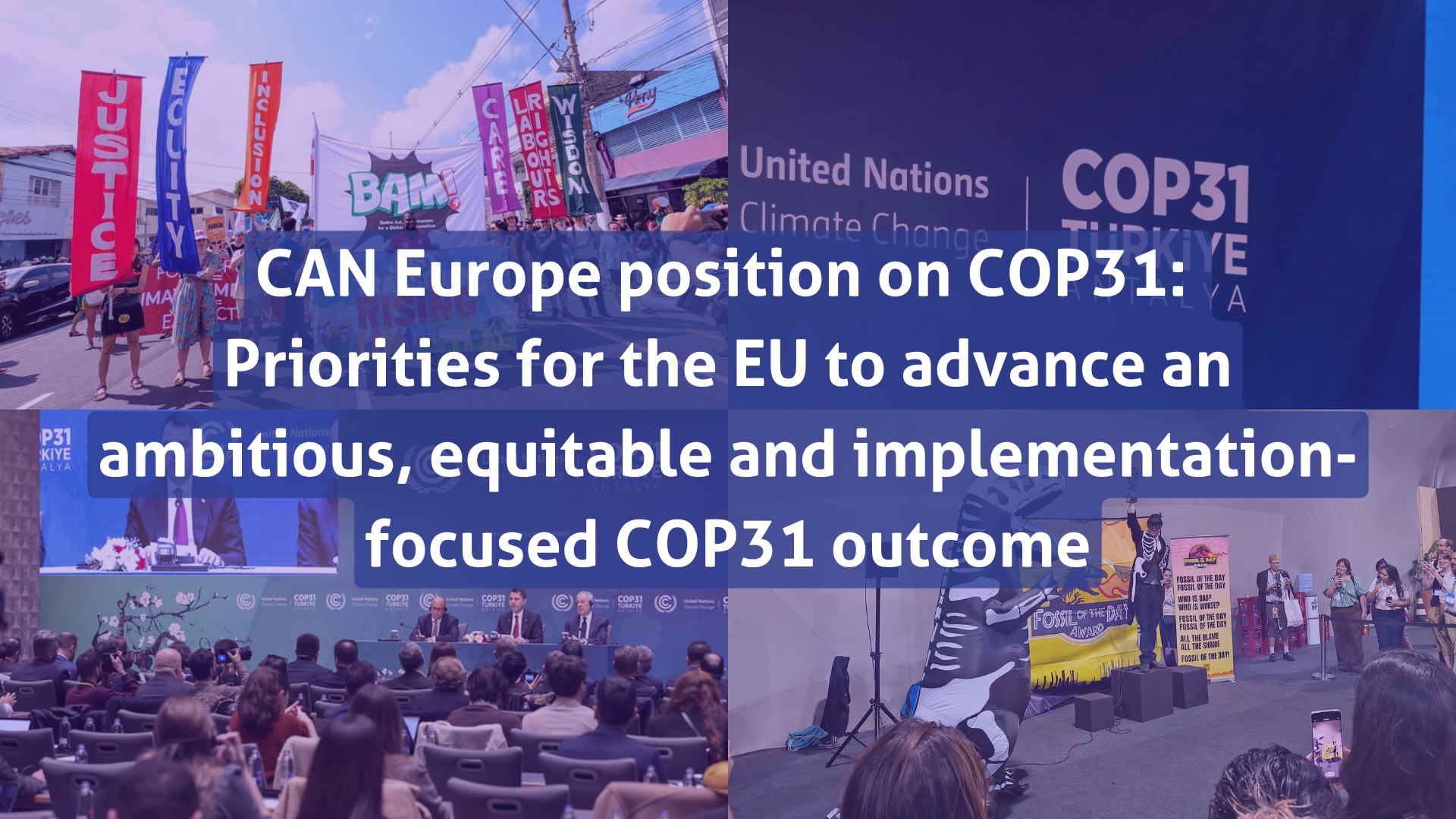
CAN Europe position on COP31: Priorities for the EU to advance an ambitious, equitable and implementation-focused COP31 outcome
-
Letters & Statements
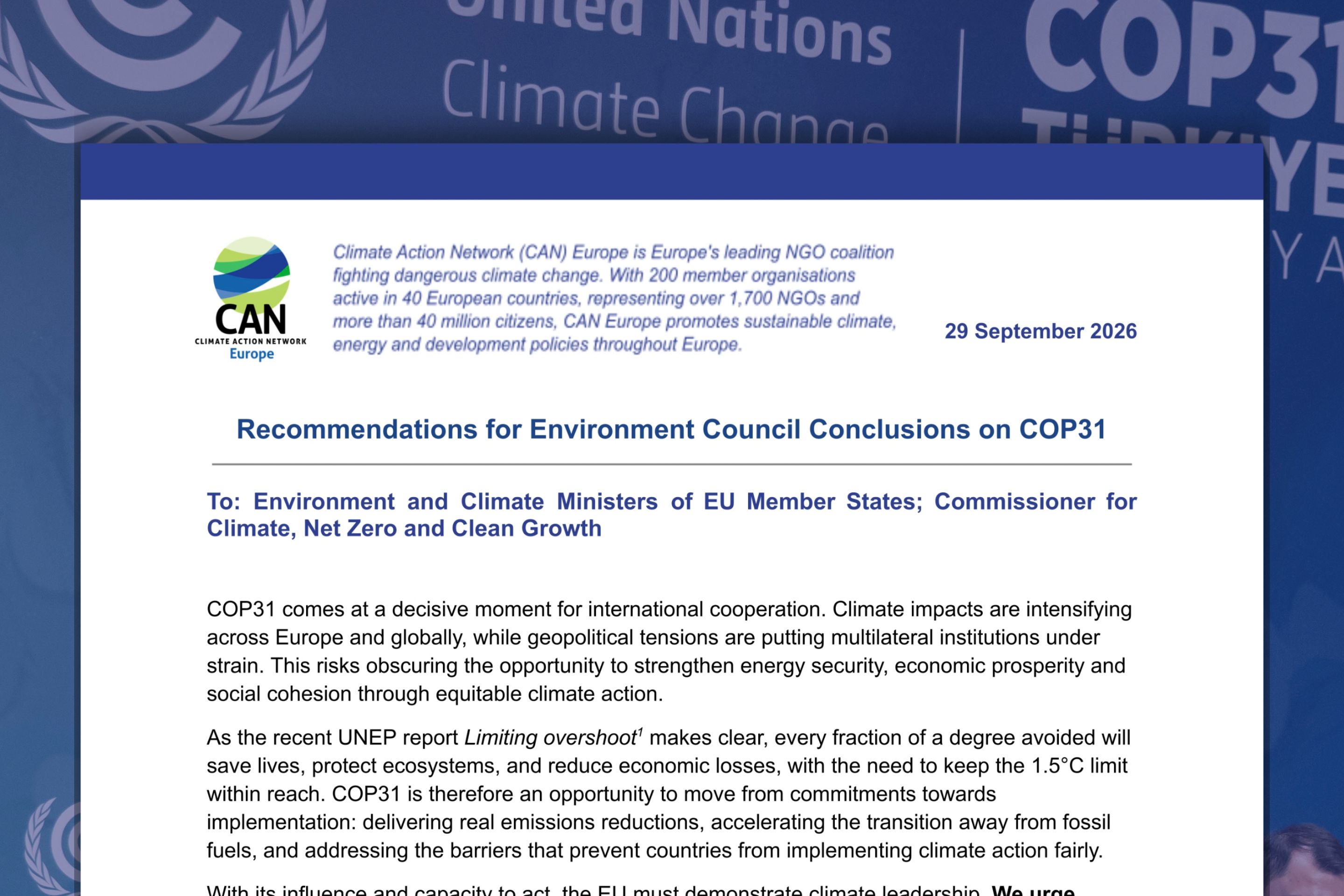
Letter: Recommendations for Environment Council Conclusions on COP31
-
Letters & Statements
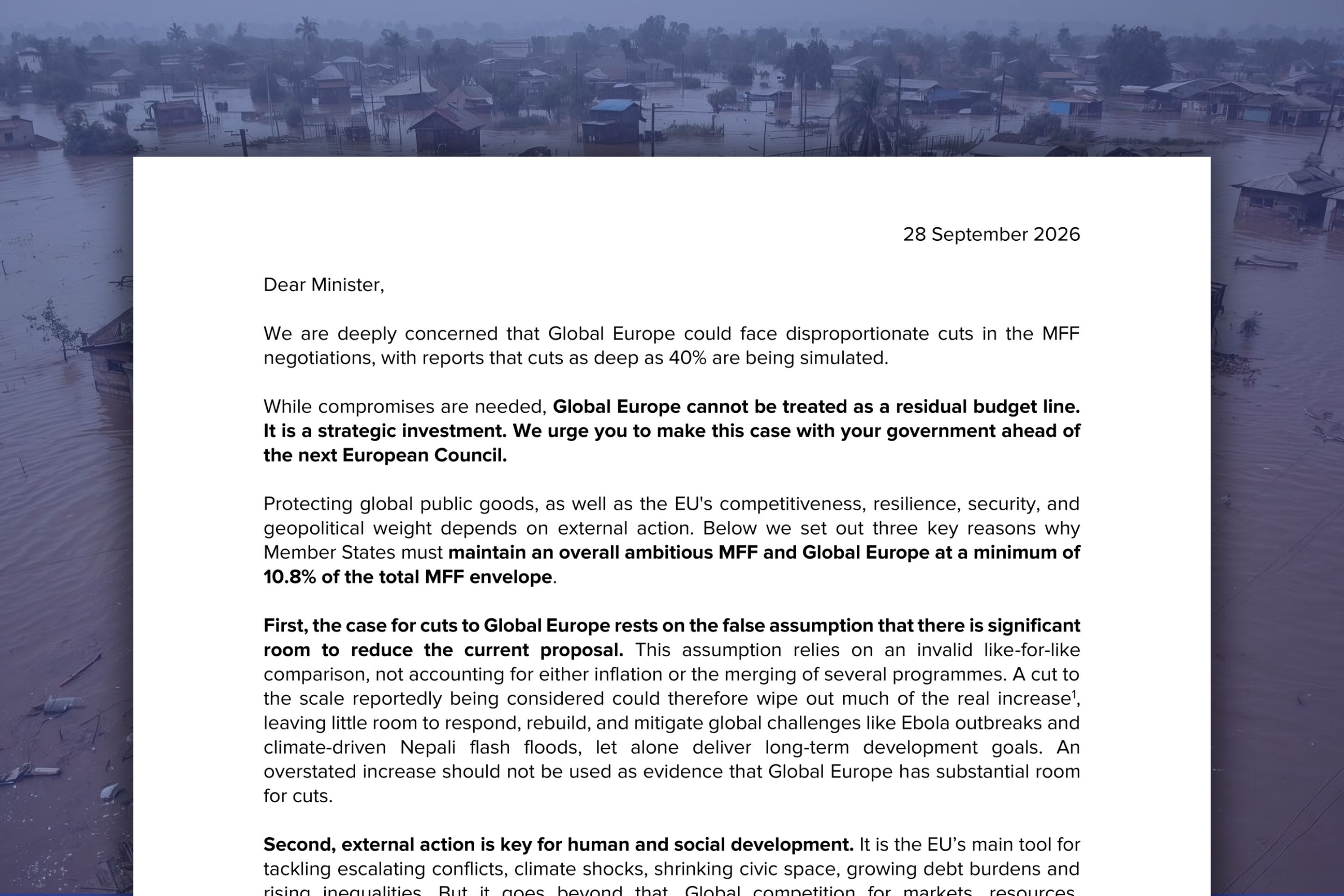
Joint Letter to EU Development Ministers: Global Europe is not a residual budget line