The Effort Sharing Regulation (ESR) or Climate Action Regulation sets legally-binding emission reduction targets for each EU Member State for the sectors not covered by the EU’s Emissions Trading Scheme (ETS). These non-ETS sectors are responsible for nearly 60% of the EU’s total emissions and include ground transportation, agriculture, waste and buildings.
The current ESR (that was agreed in 2018) aims to reduce emissions in these sectors by 30% across the EU by 2030, compared to 2005 levels. Following the decision to raise the overall EU emission reduction to at least 55% net emissions by 2030, in July 2021 the European Commission proposed a revision of the regulation (as part of the Fit for 55 package). The new target would be 40% reductions by 2030. This target is broken down into legally-binding national targets, which vary from country to country and are based on wealth, measured by GDP per capita.
The new proposal adds approximately an extra 10% reductions to the existing ESR targets of each Member State to add up to the new EU wide ESR target of -40% by 2030. The wealthiest Member States need to reduce their emissions by 50% below 2005 levels and the poorest around 10%.
Binding national targets are crucial to deliver the much needed emission reductions and the targets under ESR (and ETS) will determine what is released into our atmosphere. To be on track to limit global temperature increase to 1.5°C as agreed in the Paris Agreement, the Effort Sharing Regulation should achieve at least 50% emission reductions by 2030, compared to 2005 levels.
Besides a weak overall target, the ESR also allows Member States to use a number of flexibilities which work as de facto loopholes that allow countries to claim more emission reductions on paper than in the real world. Examples of this include, buying emission allowances from other countries or using excess emission credits from the EU carbon market (ETS) and the LULUCF sector to cover their failure to reduce emissions in the ESR sectors. This has to stop so that all sectors contribute fully to the necessary decarbonisation of the economy.
News & Publications
-
Letters & Statements
Letter: CAN Europe’s perspective on the upcoming “European climate resilience and risk management – integrated framework”
-
Reports & Briefs
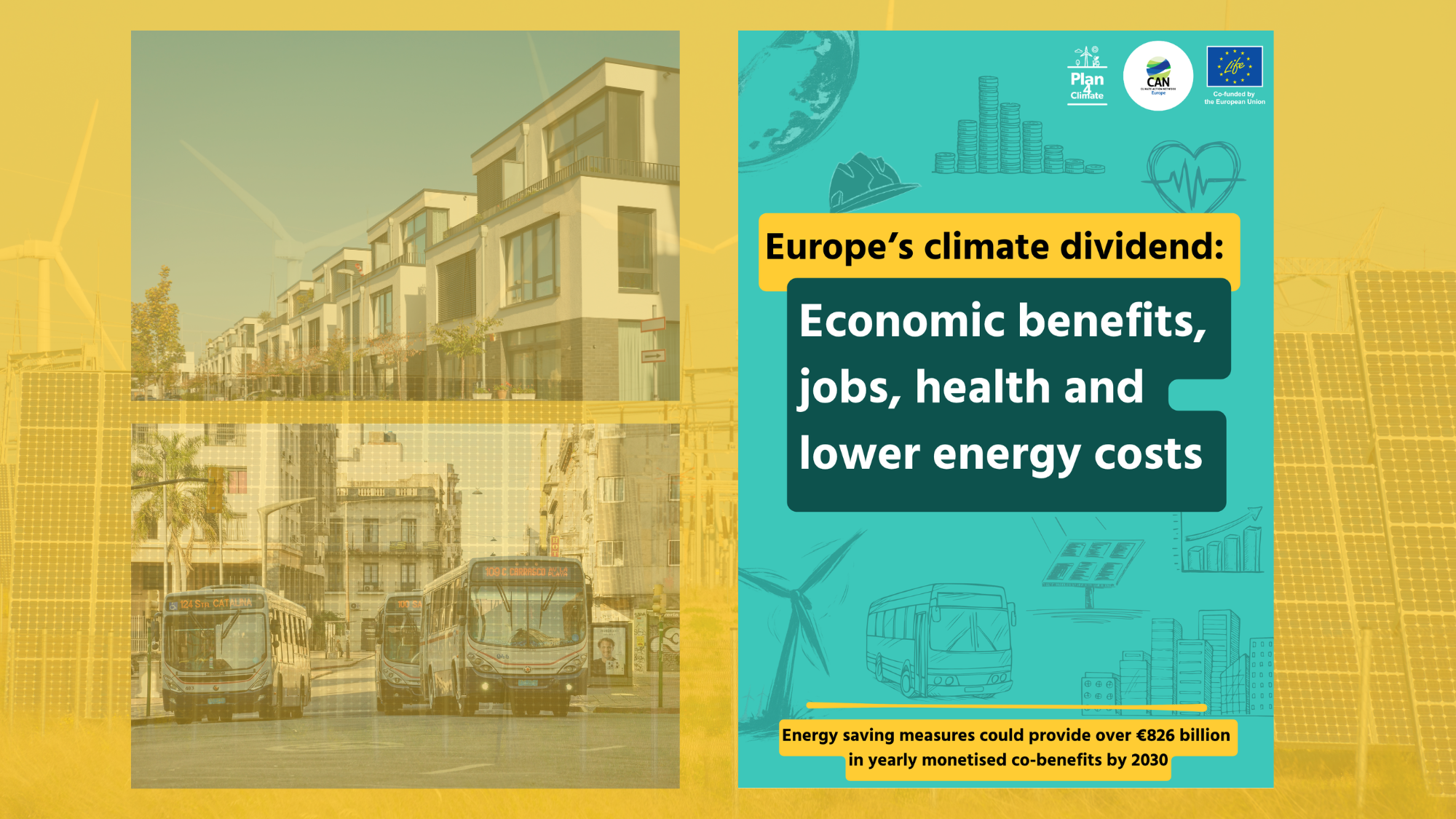
Europe’s climate dividend: Economic benefits, jobs, health and lower energy costs
-
Letters & Statements
Statement from the Coalition for Higher Ambition (HAC) urging to support a robust and ambitious EU post-2030 climate and energy framework
-
CAN Europe Positions
CAN Europe position on COP31: Priorities for the EU to advance an ambitious, equitable and implementation-focused COP31 outcome
-
Letters & Statements
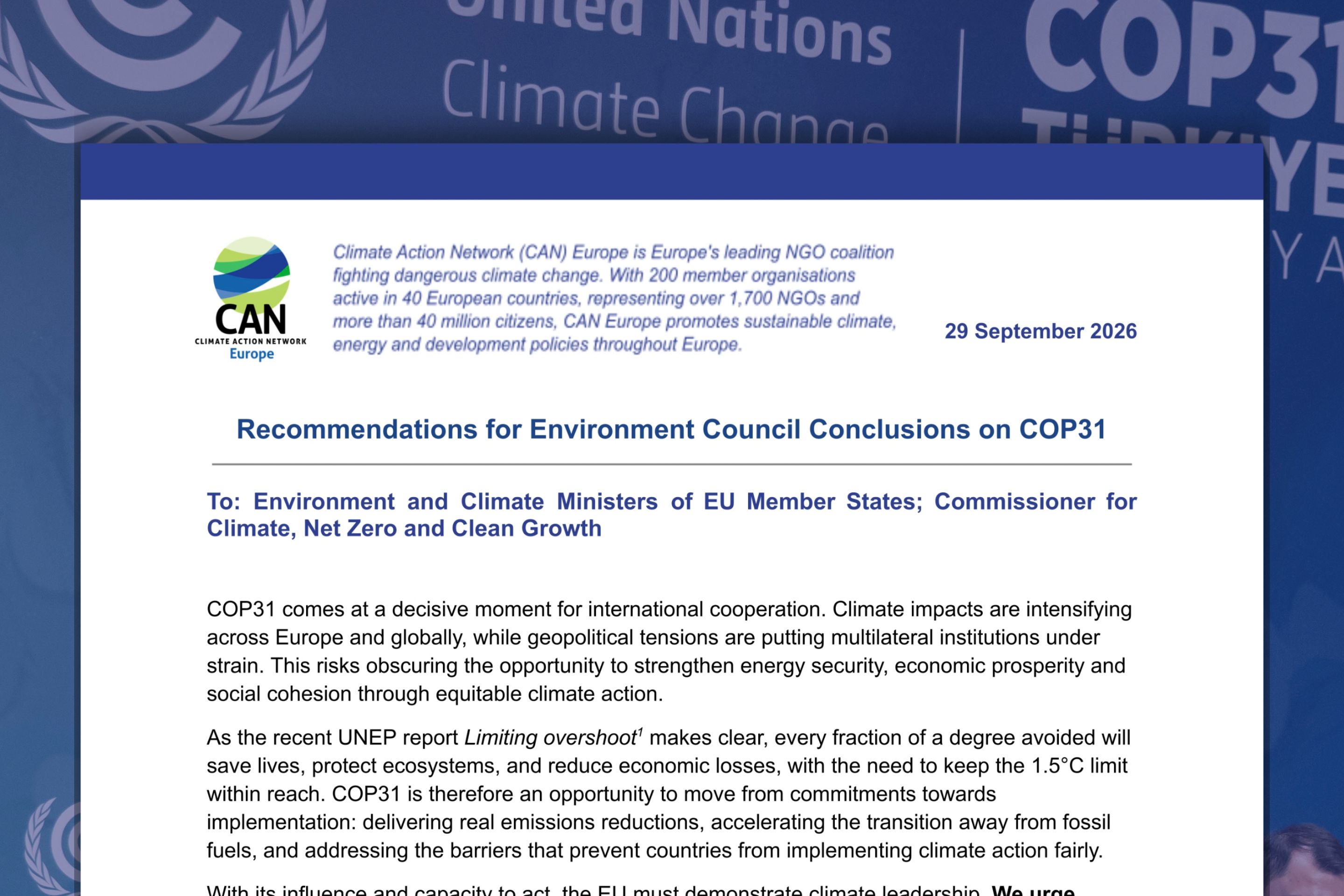
Letter: Recommendations for Environment Council Conclusions on COP31
-
Letters & Statements
Joint Letter to EU Development Ministers: Global Europe is not a residual budget line